Last Chance Auto Repair

Auto Repair Shop In Plainfield, IL

Auto Repair Shop In Plainfield, IL

Auto Repair In Plainfield At Its Finest. Serving Plainfield, Naperville, Bolingbrook, Romeoville, Chicagoland since 1978.

  • Services
        • Brake Repair
          • Brakes Near Me
          • Brakes Plainfield
          • Brakes Naperville
          • Brakes Bolingbrook
          • Brake Rotor Replacement
          • Save On Brakes
        • Emissions Repair
        • Asian Repair
        • European Repair
        • Classic & Vintage
        • Truck Repair
          • Medium Duty Repair
        • Fleet Repair
        • Charging System Repair
          • Alternator Repair
          • Alternator Replacement
        • A/C Repair
          • A/C Recharge Service
          • A/C Condenser Repair
          • A/C Compressor Repair
        • Cooling System
          • Radiator Services
          • Water Pump Replacement
          • Thermostat Replacement
        • Steering System
        • Auto Maintenance
          • Auto Tune-Up
          • Oil Change
          • Batteries
        • Engine Services
          • Starter Replacement
          • Timing Belt Replacement
          • Timing Chain Replacement
          • Cylinder Heads
          • Auto Machine Shop
        • Transmissions
          • Clutch Replacement
          • Torque Converter Replacement
        • Transfer Cases
        • Carburetors
        • Driveshaft Service
        • Diesel Repair
        • Electrical Repair
        • Suspension Repair
          • Shocks & Struts
          • Ball Joint Replacement
          • Alignment Shop
        • Exhaust Repair
          • Catalytic Converter
        • Differential Repair
        • Diagnostic
        • Auto Glass Repair
        • Auto Body Shop
        • Welding Service
        • Vehicle Inspection
        • Tire Replacement
  • Vehicles
          • DOMESTIC
          • Buick Repair
          • Cadillac Repair
          • Chevrolet Repair
          • Corvette Repair
          • Dodge Repair
          • Ford Repair
          • GMC Repair
          • Hummer Repair
          • Jeep Repair
          • RAM Repair
          • ASIAN
          • Acura Repair
          • Daewoo Repair
          • Honda Repair
          • Hyundai Repair
          • Infiniti Repair
          • Isuzu Repair
          • KIA Repair
          • Lexus Repair
          • Mazda Repair
          • Nissan Repair
          • Mitsubishi Repair
          • Scion Repair
          • Subaru Repair
          • Suzuki Repair
          • Toyota Repair
          • EUROPEAN
          • BMW Repair
          • Fiat Repair
          • Jaguar Repair
          • Land Rover Repair
          • Mercedes Benz Repair
          • MINI Cooper Repair
          • Porsche Repair
          • Saab Repair
          • Smart Repair
          • Volkswagen Repair
          • Volvo Repair
  • Towing
        • 24 Hour Towing
        • Towing Plainfield
        • Towing Bolingbrook
        • Roadside Assistance
        • Lockout Service
        • Jump Start Service
        • Mobile Battery Replacement
        • Toolbox Towing
  • Storage
    • Outdoor Car Storage
  • Coupons
        • Low Cost Guaranteed
        • Transmissions
        • Free Brake Inspection
        • Air Conditioning
        • Oil Change Specials
        • Free Computer Scan
        • Teacher Discount
        • Senior Citizen Discount
  • Blog
  • About Us
    • Reviews
    • Now Hiring
    • Car Mechanic Jobs Near Me
    • Brake Repair FAQs
  • Contact Us
  • Write A Review

What Should You Never Reveal to a Car Dealer When Negotiating?

What Should You Never Reveal to a Car Dealer When Negotiating?

When negotiating a car purchase, avoid revealing your maximum budget, desired monthly payment, exact walk-away price, urgency to buy, or emotional attachment to the vehicle too early. You should also avoid combining the vehicle price, trade-in, financing, and down payment before you’ve negotiated each part separately.

The goal isn’t to lie to a dealer. It’s to keep the transaction organized so you can compare the actual numbers and avoid negotiating against yourself.

A car purchase can involve:

  • Vehicle selling price
  • Trade-in value
  • Financing
  • Down payment
  • Taxes and fees
  • Optional add-ons

Keeping these elements separate makes it easier to determine whether you’re getting a fair deal.
Last Chance Auto Repair

What Should You Not Tell a Car Dealer?

Don’t Reveal Too Early Why It Matters
Maximum budget Reveals your spending ceiling
Desired monthly payment Loan terms can be extended to reach it
Exact walk-away price Gives the dealer your target
Urgency to buy Can weaken your negotiating position
Emotional attachment Shows you’re committed to the vehicle
Exact down payment Can shift attention away from price
Trade-in expectations Gives another negotiating lever

You should always provide accurate information required for financing and legal paperwork. The difference is between providing necessary information and voluntarily giving away negotiating leverage.

1. Don’t Reveal Your Maximum Budget

Avoid telling the salesperson the absolute maximum you’re willing to spend.

For example, if your private limit is $35,000, there’s little benefit to announcing that number before negotiating. Instead, focus on the vehicle’s selling price, fees, taxes, and total out-the-door cost.

Know your maximum budget privately so you can recognize when it’s time to walk away.

2. Don’t Negotiate Only by Monthly Payment

One of the biggest mistakes is allowing the negotiation to revolve around monthly payments.

For example, $500 per month for 48 months equals $24,000 in payments, while $500 for 72 months equals $36,000, before considering interest.

A lower monthly payment doesn’t necessarily mean you’re paying less for the vehicle.

Focus on the Out-the-Door Price

Ask for the out-the-door price, which generally includes the vehicle price, applicable taxes, mandatory fees, and other required costs. Once that number is established, you can separately evaluate financing.

3. Don’t Reveal Your Exact Down Payment Too Early

You don’t have to hide your down payment, but it’s usually better to negotiate the vehicle price first.

If you’re planning to put $10,000 down, the conversation can quickly become focused on what monthly payment you can afford instead of what the vehicle actually costs.

A better order is:

  1. Negotiate the vehicle price.
  2. Establish the out-the-door cost.
  3. Evaluate your trade-in.
  4. Compare financing.
  5. Decide on your down payment.

4. Don’t Tell Them How Urgently You Need a Car

If your current vehicle broke down and you need another car immediately, you may have less negotiating leverage.

You don’t need to volunteer that you’re desperate to buy. Remaining willing to walk away can help you avoid accepting unfavorable terms simply because you need transportation quickly.

5. Don’t Tell Them You’re Emotionally Attached

It’s fine to love a particular vehicle, but try to remain objective during negotiations.

Statements such as “This is exactly the car I’ve been looking for” can signal that you’re emotionally committed.

A better mindset is:

“I like this vehicle, but I’ll walk away if the numbers don’t make sense.”

6. Don’t Reveal Your Expected Trade-In Value Too Early

Treat your trade-in as a separate negotiation.

Suppose you’re buying a $35,000 vehicle and believe your current car is worth $15,000. Negotiate the purchase price first, then determine what the dealer will offer for your trade.

This makes it easier to compare:

  • Vehicle purchase price
  • Trade-in value
  • Amount owed on your current vehicle
  • Final transaction cost

Don’t automatically assume the highest trade allowance means the best deal. Always compare the entire transaction.

7. Don’t Reveal Your Walk-Away Number

If you’ve privately decided that you won’t pay more than $30,000, there’s generally no reason to announce that number immediately.

Instead, negotiate using market prices, vehicle condition, mileage, comparable listings, and the out-the-door cost.

Your walk-away number should help you make a decision, not give the dealer a target to reach.

8. Don’t Let Financing Determine the Vehicle Price

A dealership transaction can involve several financial components, including the vehicle sale, financing, trade-in, and optional products.

You could receive a low monthly payment but pay more because of a longer loan term. Similarly, a good financing rate doesn’t automatically mean you’re getting a good vehicle price.

9. Don’t Focus Only on the Sticker Price

The advertised price isn’t always your final cost. Ask about:

  • Dealer or documentation fees
  • Taxes
  • Registration
  • Required accessories
  • Optional products
  • Service contracts
  • Financing costs

The out-the-door price gives you a much clearer picture of what you’re actually paying.

How to Negotiate a Car the Smart Way

Step 1: Research the Vehicle

Before negotiating, research the vehicle’s market price, mileage, trim, options, condition, history, and comparable listings.

Step 2: Set Your Budget Privately

Determine your maximum purchase price, down payment, financing limit, insurance costs, and expected maintenance expenses. Keep your maximum spending limit private during the initial negotiation.

Step 3: Negotiate the Vehicle Price

Focus on the total selling price and ask for the dealer’s best out-the-door offer.

Step 4: Negotiate the Trade Separately

If you have a trade-in, establish its value independently. Compare the dealer’s offer with other valuation sources when possible.

Step 5: Compare Financing

Look at the APR, loan term, amount financed, total interest, and monthly payment. Don’t judge financing by the monthly payment alone.

Step 6: Review Every Fee

Before signing, carefully review the purchase agreement. Question unfamiliar fees, add-ons, protection products, service contracts, and accessories.

What Should You Say Instead?

If a salesperson asks about your budget, you can say:

“I’m focused on getting the best out-the-door price for the vehicle.”

If they ask about your monthly payment:

“Let’s agree on the vehicle price first, then we can discuss financing.”

If they ask about your down payment:

“I’d like to finalize the vehicle price before deciding on the financing structure.”

If they ask how much you need for your trade:

“I’d like to establish the purchase price first, then evaluate my trade separately.”

These responses are straightforward and don’t require you to be deceptive.

What Information Should You Be Honest About?

Strategic negotiation doesn’t mean lying. Always provide accurate information when it’s required for the transaction, including information needed for financing applications, vehicle ownership, insurance, loan payoff, and legal paperwork.

The objective is simply to avoid volunteering unnecessary information that could weaken your negotiating position.

Common Car-Buying Mistakes to Avoid

Buying Based on Payment Alone

A low monthly payment can result from a longer loan term and higher overall cost.

Ignoring Total Interest

Consider how much you’ll pay over the entire loan, not just the monthly amount.

Skipping a Used-Car Inspection

An independent inspection can uncover mechanical problems before you commit to the purchase.

Accepting Every Add-On

You don’t automatically need every protection product, accessory, or service contract offered.

Being Afraid to Walk Away

If the numbers don’t work, walking away can be your best option.

Frequently Asked Questions

What should you never tell a car dealer?

Avoid volunteering your maximum budget, desired monthly payment, exact walk-away price, urgency to buy, or emotional attachment. Provide accurate information whenever it’s required for the transaction.

Should I tell a car dealer how much I want to spend?

It’s generally better to negotiate based on the vehicle’s market value and out-the-door price rather than immediately revealing your maximum budget.

Should you tell a car dealer your monthly payment?

It’s usually better to negotiate the total vehicle price first. Then compare the APR, loan term, total interest, and monthly payment.

Should I tell the dealer I have a trade-in?

You can tell them you have a trade-in, but consider negotiating the purchase price and trade-in value separately so you can evaluate both numbers.

What is the most important number when buying a car?

The out-the-door price is one of the most important figures because it gives you a clearer picture of the total purchase cost. When financing, also consider APR and total interest.

Can you walk away from a car deal?

You can generally choose not to proceed before signing a binding purchase agreement. Once contracts are signed, your options may be different, so review all paperwork carefully.
Last Chance Auto Repair

Conclusion

So, what should you never reveal to a car dealer when negotiating?

Avoid volunteering your maximum budget, desired monthly payment, walk-away price, urgency, or emotional attachment. These details can provide unnecessary insight into your negotiating position.

The smartest approach is simple: know your numbers, negotiate the vehicle price first, separate the trade-in and financing, focus on the out-the-door cost, and be prepared to walk away.

You don’t need to be difficult or deceptive. You simply need to understand the numbers and make sure the deal works for you.

If you’re looking for Car Repair Plainfield IL, Car Repair Near Me, Auto Repair, Auto Repair Near Me, Automotive Repair, Brake Shop, Brake Repair, Brake Repair Plainfield IL, or Brake Service, contact Last Chance Auto Repair For Cars Trucks in Plainfield, IL.

Call 815-577-0327 for professional car and truck repair, diagnostics, brake service, maintenance, and automotive repair.
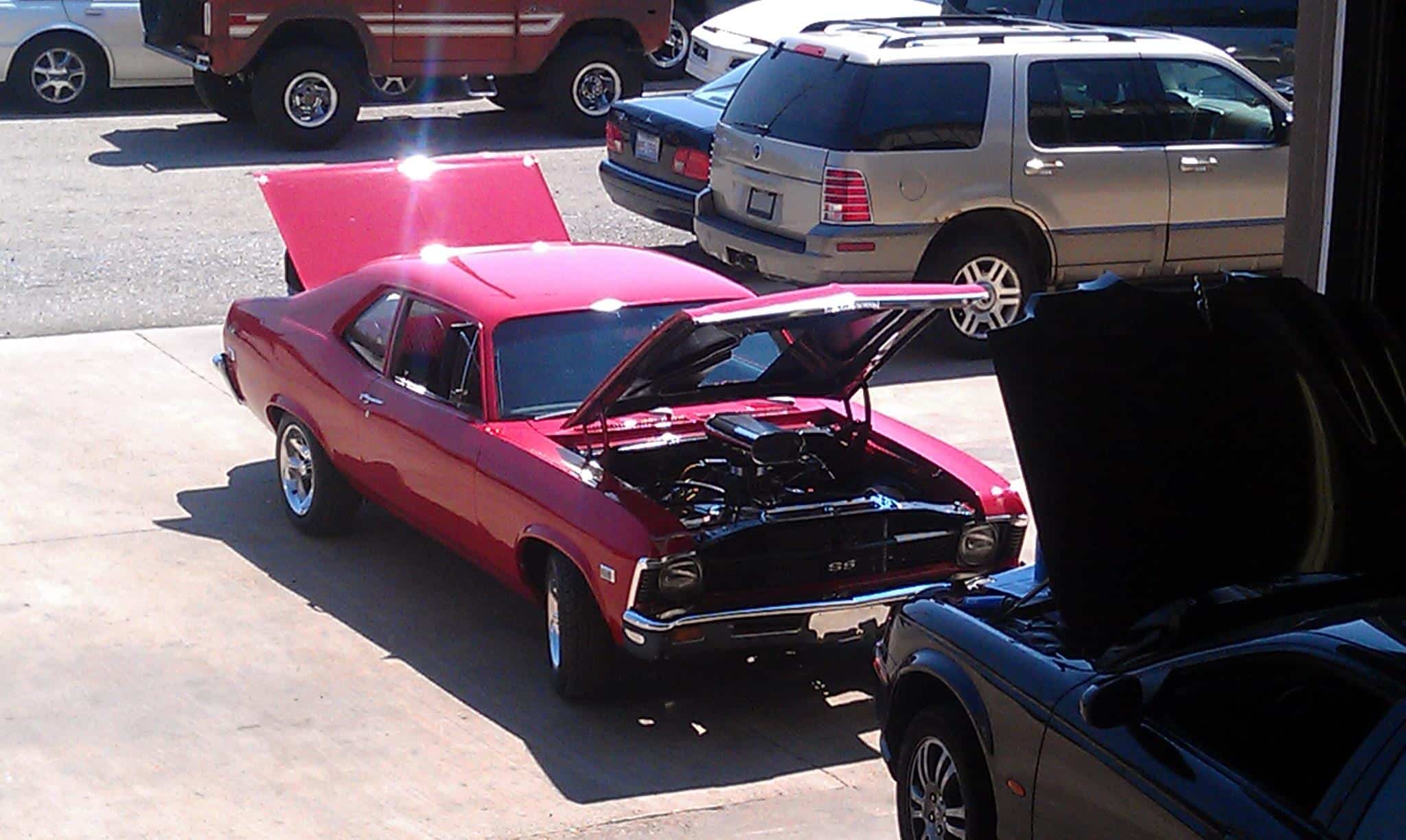
How Much Should I Spend on a Car If I Make $70,000 a Year?

If you make $70,000 a year, a reasonable car budget is generally around $20,000 to $30,000, depending on your debt, savings, credit score, down payment, and monthly expenses. A conservative buyer may prefer $20,000–$25,000, while someone with strong savings and low debt may comfortably afford closer to $30,000.

A $70,000 salary equals about $5,833 per month before taxes. However, your car budget should include more than the purchase price. Consider your payment, insurance, fuel, maintenance, repairs, registration, and other ownership costs.

Timely Car Repair Crucial(1)

How Much Car Can You Afford on a $70,000 Salary?

A common guideline is to spend approximately 30%–50% of your annual gross income on a vehicle, although your personal finances should determine the final amount.

Percentage Vehicle Price
25% $17,500
30% $21,000
35% $24,500
40% $28,000
50% $35,000

For many people, $20,000–$30,000 is a sensible range. However, income alone doesn’t determine affordability. Your existing debt, housing costs, savings, and other financial responsibilities matter just as much.

The 20/4/10 Rule for Buying a Car

The 20/4/10 rule is one useful car-buying guideline. It recommends putting at least 20% down, financing for no more than four years, and keeping transportation expenses around 10% of gross monthly income.

With a $70,000 salary:

$70,000 ÷ 12 = $5,833 per month

Ten percent is approximately $583 per month.

That transportation budget can include your car payment, insurance, fuel, and maintenance. Therefore, qualifying for a large auto loan doesn’t necessarily mean you can comfortably afford the vehicle.

What Should Your Monthly Car Payment Be?

For someone earning $70,000 annually, keeping the car payment around $400–$500 per month or less can provide more financial flexibility.

Monthly Payment Annual Payments
$300 $3,600
$400 $4,800
$500 $6,000
$600 $7,200
$700 $8,400

A $700 payment might be manageable for some buyers, but it leaves less money for housing, food, retirement, emergency savings, debt repayment, and other priorities.

Don’t Forget the Cost of Ownership

Your loan payment is only one part of owning a vehicle. Your total transportation costs may include:

  • Insurance: Rates depend on your age, location, driving history, vehicle, coverage, and deductible.
  • Fuel: Larger or less-efficient vehicles generally cost more to operate.
  • Maintenance: Oil changes, tires, brakes, filters, batteries, and fluid services add up.
  • Repairs: Eventually, components such as the suspension, alternator, starter, electrical system, transmission, or engine may require attention.
  • Taxes and registration: These expenses should also be included in your budget.

For example, a $450 car payment could become an $800–$900 monthly transportation expense after insurance, fuel, maintenance, and other costs.

A $25,000 Car on a $70,000 Salary

Suppose you purchase a $25,000 vehicle and put 20% down.

$25,000 × 20% = $5,000 down

You would have approximately $20,000 to finance, before taxes and fees. The payment would depend on your interest rate and loan term.

The $25,000 purchase price represents about 35.7% of your annual gross income, making it a reasonable target for many buyers who have manageable debt and adequate savings.

What About a $35,000 or $40,000 Car?

A $35,000 vehicle equals 50% of your annual gross income, while a $40,000 vehicle represents about 57%.

That doesn’t automatically make either vehicle unaffordable, but the purchase deserves more scrutiny.

Before spending that much, consider your:

  • Housing costs
  • Student loans
  • Credit-card debt
  • Emergency savings
  • Retirement contributions
  • Insurance costs
  • Down payment
  • Other family expenses

Someone earning $70,000 with minimal debt and substantial savings may comfortably handle a $35,000 vehicle. Someone with significant debt may struggle with a $20,000 car.

Income alone doesn’t determine affordability.

Should You Buy a New or Used Car?

Buying used can be an effective way to keep transportation costs under control. A used vehicle may offer a lower purchase price, smaller loan, lower payment, and less depreciation.

However, used vehicles may also have higher mileage, more wear, and greater maintenance or repair needs. A pre-purchase inspection can help identify potential problems before you buy.

Budget Potential Strategy
$15,000–$20,000 Older used vehicle
$20,000–$25,000 Reliable used vehicle
$25,000–$30,000 Newer used or entry-level new vehicle
$30,000–$35,000 Newer or new vehicle with careful budgeting
$35,000+ Requires stronger finances

These are general ranges rather than strict rules. A well-maintained $28,000 vehicle may be a better financial choice than a $20,000 vehicle that needs expensive repairs.

How Much Should You Put Down?

A 20% down payment is a useful target when you can afford it without draining your savings.

Car Price 20% Down
$20,000 $4,000
$25,000 $5,000
$30,000 $6,000
$35,000 $7,000

A larger down payment reduces the amount financed and may lower interest costs. However, don’t empty your emergency fund simply to make a bigger down payment.

Consider Your Other Debt

Existing debt can significantly change what you can afford.

For example, someone earning $70,000 with substantial housing, student-loan, credit-card, and other debt payments may have little room for a large car payment.

Instead of asking, “What car can someone making $70,000 buy?”, ask:

“What car can I afford after paying all my existing obligations?”

That’s the more useful question.

How Long Should Your Auto Loan Be?

Shorter loans generally mean higher monthly payments but less interest and faster payoff. Longer loans reduce the monthly payment but usually increase total interest and keep you in debt longer.

A 72- or 84-month loan can make an expensive vehicle appear affordable because the cost is spread over more years. If possible, choose a loan term that lets you pay off the vehicle without unnecessarily stretching your budget.

Your credit score can also affect your interest rate, so compare financing offers and look at the total amount you’ll repay, not just the monthly payment.

Frequently Asked Questions

How much should I spend on a car if I make $70,000 a year?

For many buyers, $20,000–$30,000 is a reasonable target. Your ideal budget depends on your debt, savings, housing costs, credit, down payment, and other expenses.

Can I afford a $30,000 car making $70,000 a year?

Potentially. A $30,000 vehicle is about 43% of your annual gross income. If you have manageable debt, sufficient savings, and a reasonable down payment, it may fit your budget.

Can I afford a $40,000 car on a $70,000 salary?

You may qualify for financing, but approval doesn’t necessarily mean affordability. A $40,000 vehicle is a substantial purchase relative to a $70,000 income and is more appropriate when your overall finances are strong.

What should my car payment be if I make $70,000?

A payment of approximately $400–$500 per month or less can provide financial flexibility for many buyers. Remember that insurance, fuel, maintenance, repairs, taxes, and registration are additional expenses.

Is it better to buy a $20,000 or $30,000 car?

It depends on the vehicle. A reliable $30,000 car may provide better value than a problematic $20,000 vehicle. Compare reliability, maintenance, fuel economy, insurance, and expected repair costs.

Should I buy a new or used car?

Either can make sense. Used cars can reduce the purchase price and depreciation, while new cars may provide warranties and fewer initial maintenance concerns. Compare the total cost of ownership before deciding.

Last Chance Auto Repair

Conclusion

So, how much should you spend on a car if you make $70,000 a year?

For many buyers, $20,000–$30,000 is a sensible target, with around $25,000 serving as a reasonable middle ground when debt and other expenses are under control.

Before buying, consider your take-home pay, housing costs, existing debt, emergency savings, retirement contributions, insurance, fuel, maintenance, repairs, down payment, and interest rate.

Most importantly, don’t confuse what a lender will approve with what you can comfortably afford. The right car should fit your financial life without preventing you from saving, investing, or handling unexpected expenses.

If you’re looking for Car Repair Plainfield IL, Car Repair Near Me, Auto Repair, Auto Repair Near Me, Automotive Repair, Brake Shop, Brake Repair, Brake Repair Plainfield IL, or Brake Service, contact Last Chance Auto Repair For Cars Trucks in Plainfield, IL.

Call 815-577-0327 for professional car and truck repair, diagnostics, brake service, maintenance, and automotive repair.

What Is the #1 Most Unreliable Car?

There isn’t one universally accepted #1 most unreliable car because reliability rankings vary by model year, survey methodology, and what is being measured. Some studies focus on owner complaints, while others consider repair frequency, predicted reliability, or long-term durability. However, the Chrysler Pacifica has received poor reliability results for certain model years.

If you’re buying a used vehicle, don’t judge reliability by the model name alone. The specific model year, engine, transmission, and maintenance history are often much more important.

Engine Maintenance

What Makes a Car Unreliable?

A car is generally considered unreliable when it experiences frequent unexpected problems or requires more repairs than comparable vehicles.

Common reliability issues include:

  • Engine or transmission failures
  • Electrical problems
  • Cooling-system failures
  • Suspension problems
  • Air-conditioning issues
  • Recurring warning lights
  • Premature brake or steering wear
  • Infotainment and electronic failures
  • Expensive repairs

Reliability also isn’t the same as repair cost. A vehicle may have several inexpensive issues, while another may experience one major engine or transmission failure costing thousands of dollars.

Is There Really a #1 Worst Car?

Not definitively.

Different organizations use different criteria to rank vehicle reliability, including:

  • Owner-reported problems
  • Predicted reliability
  • Repair frequency
  • Repair costs
  • Warranty claims
  • Recalls
  • Consumer complaints
  • Long-term durability

Because the methodology differs, the vehicle ranked last by one organization may not be ranked last by another.

Why Model Year Matters So Much

One of the biggest mistakes when researching reliability is assuming every vehicle with the same name is equally dependable.

Manufacturers regularly change engines, transmissions, electronics, software, suspension components, and safety systems. A redesigned generation can therefore have very different reliability characteristics from an earlier version.

Instead of asking, “Is this model unreliable?”, ask:

“How reliable is this specific model year and powertrain?”

The year, engine, and transmission can make a significant difference.

The Chrysler Pacifica Example

The Chrysler Pacifica demonstrates why individual model years matter. Certain Pacificas have received complaints involving electrical systems, transmission behavior, sliding doors, Uconnect and infotainment systems, batteries, and engine-related problems.

That doesn’t mean every Pacifica is unreliable. A well-maintained vehicle with documented service can perform very differently from a neglected, high-mileage example.

If you’re considering a used Pacifica, research the exact year, check for known problems, review maintenance records, and have the vehicle professionally inspected.

Other Vehicles That Have Had Poor Reliability Results

Reliability rankings change from year to year, but some models have periodically appeared toward the lower end of reliability studies. Examples have included:

  • Jeep Grand Cherokee
  • Jeep Wrangler
  • Chevrolet Silverado
  • Ford F-150
  • Rivian R1T
  • Chrysler Pacifica
  • Certain Land Rover models
  • Some luxury European vehicles

This doesn’t automatically make these vehicles bad purchases. Some offer capabilities—such as towing, off-road performance, luxury, or technology—that may justify higher ownership costs for certain drivers.

Why Luxury Cars Can Be Expensive to Maintain

Reliability and repair cost aren’t the same thing.

A luxury vehicle may be reasonably reliable but still expensive to maintain because it can use specialized components, advanced electronics, complex suspension systems, expensive brakes, and specialized diagnostic equipment.

A relatively simple repair on a mainstream vehicle can therefore cost considerably more on a luxury model.

Why Modern Cars Have More Potential Failure Points

Modern vehicles contain significantly more technology than older cars. Many have electronic control modules, cameras, radar sensors, parking sensors, touchscreens, driver-assistance systems, turbochargers, direct fuel injection, complex emissions equipment, and electronically controlled transmissions.

These systems can improve safety, performance, fuel economy, and comfort, but they also create more components that can potentially fail.

Is an Unreliable Car Always a Bad Car?

No.

A vehicle with below-average reliability may still be a good choice for someone who values its performance or capabilities.

For example, a buyer may accept higher maintenance costs for:

  • Performance
  • Towing capability
  • Off-road ability
  • Luxury
  • Advanced technology
  • Driving experience

The better question isn’t simply whether a vehicle is reliable. It’s whether its reliability, repair costs, and capabilities fit your needs and budget.

How Much Can an Unreliable Car Cost You?

Major repairs can become expensive quickly.

Repair Potential Cost
Engine replacement $3,000–$10,000+
Transmission replacement $2,500–$7,500+
AC system repair $500–$2,500+
Electrical diagnosis/repair $200–$3,000+
Suspension repairs $500–$2,500+
Catalytic converter $1,000–$3,000+
Hybrid/EV battery repair $2,000–$10,000+

Actual costs vary based on the vehicle, parts, labor rates, and extent of the damage.

Warning Signs That Indicate a Visit to the Auto Repair Shop(1)

How to Avoid Buying an Unreliable Used Car

1. Research the Exact Model Year

Research the year + engine + transmission, not just the vehicle’s name. Look for recurring problems associated with that specific combination.

2. Check the Vehicle History

Review accident history, mileage, ownership history, title status, maintenance records, and previous repairs.

3. Get a Pre-Purchase Inspection

A professional inspection can identify problems that aren’t obvious during a test drive. The technician should examine the engine, transmission, brakes, suspension, steering, tires, leaks, electrical systems, and undercarriage.

4. Review Maintenance Records

A properly maintained vehicle can be a better purchase than a theoretically more reliable car that has been neglected.

5. Budget for Repairs

Even reliable cars eventually need maintenance. Plan for tires, brakes, batteries, fluids, belts, suspension components, and unexpected repairs.

What Are the Most Important Reliability Factors?

Engine

Research whether the engine has known issues involving oil consumption, cooling, timing components, or other major failures.

Transmission

Transmission repairs can be among the most expensive repairs, making transmission reliability particularly important.

Electrical System

Electrical problems can be difficult to diagnose, especially in vehicles with numerous electronic modules.

Cooling System

Cooling-system failures can lead to severe engine damage if overheating isn’t addressed quickly.

Maintenance History

Regular maintenance has a major effect on how long a vehicle remains dependable.

Mileage

High mileage doesn’t automatically mean a vehicle is unreliable, but wear-related repairs become more likely as components age.

What Should You Do If Your Car Keeps Breaking Down?

If your vehicle repeatedly develops problems, don’t simply replace parts without determining the underlying cause.

  • Ask the repair shop:
  • What exactly failed?
  • What caused the failure?
  • Could another problem be responsible?
  • Is the repair temporary or permanent?
  • What else should be inspected?
  • What is the total repair cost?
  • What warranty covers the repair?

A proper diagnosis can help prevent repeated repairs that don’t solve the original problem.

Frequently Asked Questions

What is the #1 most unreliable car?

There isn’t one universally recognized #1 least reliable vehicle. Rankings vary by study and model year. The Chrysler Pacifica has appeared among poorly rated vehicles in some reliability assessments, although reliability varies considerably by year and individual vehicle.

What car brand has the most problems?

No single brand is consistently ranked as the worst in every reliability study. Results change depending on the year, vehicles included, and methodology used.

Are unreliable cars expensive to repair?

They can be. Frequent repairs increase ownership costs, while major engine, transmission, electrical, or hybrid failures can cost thousands of dollars.

Is it better to buy an older reliable car or a newer unreliable car?

Condition and maintenance history are both important. A well-maintained older vehicle with a strong reliability record can sometimes be a better purchase than a newer vehicle with recurring expensive problems.

Does high mileage mean a car is unreliable?

Not necessarily. A high-mileage vehicle with excellent maintenance can be more dependable than a low-mileage vehicle that has been neglected.

How can I tell if a used car is reliable?

Research the specific model year and powertrain, check known problems and maintenance records, review the vehicle history, and have a qualified technician perform a pre-purchase inspection.

Conclusion

So, what is the #1 most unreliable car? There isn’t one vehicle that can objectively be called the worst for every driver, model year, and reliability measurement. However, certain vehicles, including some Chrysler Pacifica model years, have received poor reliability results or generated significant owner complaints.

The most important lesson is that model year, powertrain, condition, and maintenance history matter. Don’t buy or avoid a vehicle solely because of its name.

If your car is experiencing recurring problems, an accurate diagnosis can help determine whether you need a simple repair or are facing a larger mechanical issue.

For Car Repair Plainfield IL, Car Repair Near Me, Auto Repair, Auto Repair Near Me, Automotive Repair, Brake Shop, Brake Repair, Brake Repair Plainfield IL, or Brake Service, contact Last Chance Auto Repair For Cars Trucks in Plainfield, IL.

Call 815-577-0327 to schedule service or discuss your vehicle’s repair needs.

  • « Previous Page
  • 1
  • …
  • 7
  • 8
  • 9
  • 10
  • 11
  • …
  • 51
  • Next Page »

Reviews

[RICH_REVIEWS_SHOW category=”Auto Repair In Plainfield” num=”3″]
[RICH_REVIEWS_SNIPPET category=”all”]

Facebook Posts

Last Chance Auto Repair For Cars Trucks

2 days ago

Last Chance Auto Repair For Cars Trucks
✨LOOK AT THAT DIFFERENCE!

Cloudy or yellow headlights can affect visibility and make your vehicle look older than it is.

The right restoration or replacement solution can help improve headlight clarity and your vehicle's appearance.

💡 Are your headlights looking cloudy? Get them checked and explore your options!

📞 Call Now: ‪+18155770327
🌐 Visit: lastchanceautorepairs.com
📩 info@lastchanceautorepairs.#LastChanceAutoRepairep#headlightrestorationat#carcarerc#autorepairep#beforeandafterafter
...

Photo

View on Facebook (opens in a new tab)
· Share

Share on Facebook (opens in a new tab) Share on Twitter (opens in a new tab) Share on LinkedIn (opens in a new tab) Share by Email (opens in a new tab)

Last Chance Auto Repair For Cars Trucks

3 days ago

Last Chance Auto Repair For Cars Trucks
🚨QUIZ TIME! TEST YOUR CAR KNOWLEDGE!

Imagine you're driving and suddenly your check engine light turns o. What should you do?

🤔 What's your answer?

A️.Ignore it and keep driving
B️. Get the issue checked
C️. Drive faster and hope it goes away 😂

👇 COMMENT A, B, OR C BELOW! Let's see who knows their car care! 💬

💡 Remember: Your check engine light can indicate different problems. Getting it checked can help identify the cause before it becomes more serious. If the light flashes or your vehicle runs abnormally, pull over safely and seek professional assistance.

📞 Call Now: ‪+18155770327
🌐 Visit: lastchanceautorepairs.com
📩 info@lastchanceau#LastChanceAutoRepairha#CarQuizep#autorepairiz#CarCareTipsr #CarMaintenance#c#automotiverepairutomotiverepair
...

Photo

View on Facebook (opens in a new tab)
· Share

Share on Facebook (opens in a new tab) Share on Twitter (opens in a new tab) Share on LinkedIn (opens in a new tab) Share by Email (opens in a new tab)

Last Chance Auto Repair For Cars Trucks

3 days ago

Last Chance Auto Repair For Cars Trucks
THE RIGHT REPAIR MAKES A DIFFERENCE!

When your car or truck needs attention, choosing the right auto repair service matters. From identifying potential problems to performing the necessary repairs, proper vehicle care helps keep you moving with confidence. 💪

✅ Professional vehicle inspection
✅ Help identify potential issues
✅ Reliable automotive repair solutions
✅ Maintenance to help keep your vehicle road-ready

At Last Chance Auto Repair For Cars Trucks, we're ready to help you take care of your vehicle!

Don't ignore the warning signs. Address your car troubles before they become bigger concerns.

📞 Call Now: ‪+18155770327
🌐 Visit: lastchanceautorepairs.com
📩 info@lastchanceautorepairs.com

Last Chance Auto Repair For Cars Trucks Keeping You Moving, One Repair at#LastChanceAutoRepairau#autorepairau#CarRepair#c#truckrepairru#automotiverepairti#VehicleMaintenanceai#AutoRepairShopre#carcare #carcare
...

Video

View on Facebook (opens in a new tab)
· Share

Share on Facebook (opens in a new tab) Share on Twitter (opens in a new tab) Share on LinkedIn (opens in a new tab) Share by Email (opens in a new tab)

Best Auto Repair Shop in Plainfield, IL

Recent Posts

  • What Are Common Auto Repair Shop Services?
  • What Are Signs I Need an Auto Repair Shop?
  • Does an Auto Repair Shop Offer Tire Services?
  • Can an Auto Repair Shop Repair Suspension Problems?
  • Which Part of a Car Is Most Expensive to Fix?

Contact Us

12052 S Naper Plainfield Rd
Plainfield, IL 60585
(815) 577-0327
info@lastchanceautorepairs.com

Contact Us

12052 S Naper Plainfield Rd
Plainfield, IL 60585
(815) 577-0327
info@lastchanceautorepairs.com

Service Area

Plainfield, 60585, 60544, 60586, Naperville, 60564, Bolingbrook, 60490, 60440, Romeoville, 60446, Will, Kendall, DuPage, Counties. Our auto repair shop in Plainfield, IL, has been serving the local area plus all surrounding Chicagoland since 1978.

Learn About Naperville, IL

Learn About Plainfield, Illinois

Specialties

• Computer Diagnostic • Brake Shop • Engine Replacement • Transmission Rebuild • Clutch Replacement • Differential Rebuild • Suspension Shop • Steering • Shocks & Struts • Heating & Cooling • Electrical • Exhaust Shop • Catalytic Converter Replacement • Alignment • Domestic & Foreign Vehicle Service • Auto Repair In Plainfield, IL • Auto Repair Shops Near Me • Towing Service Near Me

Last Chance Auto Repair In Plainfield, IL | Copyright © 1978 - 2026 | All Rights Reserved | (815) 577-0327