Last Chance Auto Repair

Auto Repair Shop In Plainfield, IL

Auto Repair Shop In Plainfield, IL

Auto Repair In Plainfield At Its Finest. Serving Plainfield, Naperville, Bolingbrook, Romeoville, Chicagoland since 1978.

  • Services
        • Brake Repair
          • Brakes Near Me
          • Brakes Plainfield
          • Brakes Naperville
          • Brakes Bolingbrook
          • Brake Rotor Replacement
          • Save On Brakes
        • Emissions Repair
        • Asian Repair
        • European Repair
        • Classic & Vintage
        • Truck Repair
          • Medium Duty Repair
        • Fleet Repair
        • Charging System Repair
          • Alternator Repair
          • Alternator Replacement
        • A/C Repair
          • A/C Recharge Service
          • A/C Condenser Repair
          • A/C Compressor Repair
        • Cooling System
          • Radiator Services
          • Water Pump Replacement
          • Thermostat Replacement
        • Steering System
        • Auto Maintenance
          • Auto Tune-Up
          • Oil Change
          • Batteries
        • Engine Services
          • Starter Replacement
          • Timing Belt Replacement
          • Timing Chain Replacement
          • Cylinder Heads
          • Auto Machine Shop
        • Transmissions
          • Clutch Replacement
          • Torque Converter Replacement
        • Transfer Cases
        • Carburetors
        • Driveshaft Service
        • Diesel Repair
        • Electrical Repair
        • Suspension Repair
          • Shocks & Struts
          • Ball Joint Replacement
          • Alignment Shop
        • Exhaust Repair
          • Catalytic Converter
        • Differential Repair
        • Diagnostic
        • Auto Glass Repair
        • Auto Body Shop
        • Welding Service
        • Vehicle Inspection
        • Tire Replacement
  • Vehicles
          • DOMESTIC
          • Buick Repair
          • Cadillac Repair
          • Chevrolet Repair
          • Corvette Repair
          • Dodge Repair
          • Ford Repair
          • GMC Repair
          • Hummer Repair
          • Jeep Repair
          • RAM Repair
          • ASIAN
          • Acura Repair
          • Daewoo Repair
          • Honda Repair
          • Hyundai Repair
          • Infiniti Repair
          • Isuzu Repair
          • KIA Repair
          • Lexus Repair
          • Mazda Repair
          • Nissan Repair
          • Mitsubishi Repair
          • Scion Repair
          • Subaru Repair
          • Suzuki Repair
          • Toyota Repair
          • EUROPEAN
          • BMW Repair
          • Fiat Repair
          • Jaguar Repair
          • Land Rover Repair
          • Mercedes Benz Repair
          • MINI Cooper Repair
          • Porsche Repair
          • Saab Repair
          • Smart Repair
          • Volkswagen Repair
          • Volvo Repair
  • Towing
        • 24 Hour Towing
        • Towing Plainfield
        • Towing Bolingbrook
        • Roadside Assistance
        • Lockout Service
        • Jump Start Service
        • Mobile Battery Replacement
        • Toolbox Towing
  • Storage
    • Outdoor Car Storage
  • Coupons
        • Low Cost Guaranteed
        • Transmissions
        • Free Brake Inspection
        • Air Conditioning
        • Oil Change Specials
        • Free Computer Scan
        • Teacher Discount
        • Senior Citizen Discount
  • Blog
  • About Us
    • Reviews
    • Now Hiring
    • Car Mechanic Jobs Near Me
    • Brake Repair FAQs
  • Contact Us
  • Write A Review

What Is the $3,000 Rule for Cars?

What Is the $3,000 Rule for Cars?

The $3,000 rule for cars is a simple rule of thumb that helps vehicle owners decide whether to repair an older car or replace it. The idea is that when a major repair approaches $3,000, you should look more closely at the vehicle’s value, condition, reliability, and likely future repair costs.

The $3,000 rule is not an official automotive industry standard. It is simply a budgeting guideline.

A $3,000 repair does not automatically mean you should replace your car. If the vehicle is reliable, well-maintained, and worth significantly more than the repair, spending $3,000 may make sense. But if the car is worth only $4,000 and already needs several other major repairs, replacement may deserve consideration.

The best decision depends on the overall cost of keeping the vehicle, not one repair bill.
Protecting Your Investment

How Does the $3,000 Car Rule Work?

When a repair reaches approximately $3,000, ask:

  • What is the car currently worth?
  • How reliable has it been?
  • What is its mileage and overall condition?
  • What other repairs may be needed soon?
  • How long do you plan to keep it?
  • What would a dependable replacement cost?
  • Is the repair necessary for safety or reliability?

For example, spending $3,000 on a vehicle worth $15,000 may be reasonable. Spending $3,000 on a vehicle worth $3,500 requires much more careful consideration.

Is the $3,000 Rule Accurate?

Not by itself.

The same repair can make financial sense for one vehicle but not another.

Car A

  • Value: $18,000
  • Good maintenance history
  • No major problems
  • Repair: $3,000

Car B

  • Value: $4,000
  • Poor maintenance history
  • Multiple problems
  • Repair: $3,000

Repairing Car A may be an obvious choice, while Car B may be nearing the point where replacement makes more sense.

Therefore, treat the $3,000 rule as a warning point, not a strict repair-or-replace threshold.

Why Is $3,000 a Significant Repair Amount?

A $3,000 repair can represent a large portion of an older vehicle’s value. Repairs that can potentially reach this amount include:

  • Transmission or engine repairs
  • Engine replacement
  • Major suspension work
  • Extensive electrical repairs
  • Hybrid battery replacement
  • Major brake or air-conditioning repairs
  • Collision damage

Actual costs vary by vehicle, parts, labor rates, and location.

Another concern is that older vehicles may require additional repairs after a major component has been fixed.

Consider the Repair-to-Value Ratio

One useful calculation is:

Repair cost ÷ vehicle value × 100 = repair-to-value percentage

If your car is worth $12,000 and needs $3,000 in repairs:

$3,000 ÷ $12,000 × 100 = 25%

A 25% repair-to-value ratio may be reasonable if the car is otherwise dependable.

If the car is worth $5,000:

$3,000 ÷ $5,000 × 100 = 60%

That is a much larger financial commitment.

Still, this percentage should not be the only factor.

What If the Car Is Worth Less Than $3,000?

A common misconception is that you should never spend $3,000 repairing a vehicle worth less than $3,000. That is not necessarily true.

Suppose a $2,500 car needs $2,000 in repairs. Replacing it could require a down payment, financing, taxes, registration, insurance changes, maintenance, and unexpected repairs.

If the current vehicle is otherwise reliable, spending $2,000 may still be cheaper than purchasing another dependable vehicle.

Compare Repair Costs With Replacement Costs

Do not compare the repair bill only with the car’s resale value. Compare it with the cost of replacing the vehicle with something equally reliable.

For example:

Option Estimated Cost
Repair current vehicle $3,000
Purchase another used vehicle $12,000
Immediate maintenance on replacement 500–2,000+
Taxes, registration, and fees Varies

If a $3,000 repair keeps a dependable vehicle on the road for several more years, it may be considerably cheaper than replacing it.

Consider the Vehicle’s Overall Condition

Before approving a major repair, ask a mechanic to evaluate the vehicle as a whole.

Consider:

  • Brakes and tires
  • Suspension
  • Engine condition
  • Transmission
  • Oil or coolant leaks
  • Air conditioning
  • Battery
  • Rust or structural damage

A $3,000 repair on an otherwise excellent vehicle is very different from a $3,000 repair followed by another $5,000 in needed work.

Maintenance history also matters. A well-maintained car with one major failure may be worth repairing, while a vehicle with repeated breakdowns deserves more scrutiny.

Mileage matters, but it should not be the deciding factor. A high-mileage vehicle that has been properly maintained can be more dependable than a lower-mileage car that has been neglected.

What About the 50% Rule for Car Repairs?

The 50% rule is another informal guideline. It suggests reconsidering a repair when the cost approaches roughly half of the vehicle’s current value.

For example, a $3,000 repair on a $6,000 vehicle represents 50% of its value.

Like the $3,000 rule, the 50% rule is not an official automotive standard. It is simply another tool for evaluating a major repair.

When Should You Repair a Car After a $3,000 Estimate?

Repairing the vehicle may make sense when:

  • It is otherwise reliable.
  • The repair addresses a specific problem.
  • It has a good maintenance history.
  • The body and interior remain in good condition.
  • No major repairs are expected soon.
  • Repairing costs substantially less than replacement.
  • You plan to keep it for several more years.

A $3,000 repair can be a reasonable investment in continued ownership.

When Should You Consider Replacing the Car?

Replacement may make more sense when:

  • Several major systems are failing.
  • More expensive repairs are likely soon.
  • The vehicle has severe structural rust or damage.
  • It has repeated breakdowns.
  • The engine and transmission are both nearing failure.
  • The repair cost is high relative to the vehicle’s condition.
  • You no longer trust the vehicle for dependable transportation.

How to Make the Repair-or-Replace Decision

Before spending $3,000 or more:

1. Get a Detailed Diagnosis

Make sure you know exactly what failed before authorizing expensive work.

2. Request a Written Estimate

Ask for labor, parts, diagnostic charges, fees, and taxes to be clearly identified.

3. Ask About Future Repairs

Ask your mechanic:

“If I repair this today, what other major repairs might I expect within the next 12 to 24 months?”

4. Get a Second Opinion

For a major repair, another qualified technician can confirm the diagnosis and estimate.

5. Determine the Vehicle’s Current Value

Use realistic market information based on mileage, condition, location, and equipment.

6. Compare Replacement Costs

Find out what it would actually cost to purchase a dependable replacement.

7. Consider How Long You Will Keep It

A major repair may be easier to justify if you expect to keep the vehicle for several more years.
Last Chance Auto Repair

Frequently Asked Questions

Is the $3,000 rule for cars real?

It is a general rule of thumb, not an official automotive or financial standard. It encourages owners to evaluate a major repair based on the vehicle’s value, condition, reliability, and future needs.

Should I repair a car that needs $3,000 in work?

It depends. A reliable vehicle in good condition may be worth repairing, while a low-value vehicle with several major problems may be better replaced.

Is it worth fixing a car worth $5,000?

It can be. Although a $3,000 repair represents a large percentage of its value, replacing the vehicle could cost much more.

What is the 50% rule for car repairs?

It is an informal guideline suggesting that owners reconsider repairs approaching roughly half the vehicle’s value. It is not an official industry standard.

Should I get a second opinion on a $3,000 car repair?

Yes. A second professional diagnosis can help confirm the problem and determine whether the recommended repair and price are reasonable.

Conclusion

The $3,000 rule for cars is best viewed as a warning sign rather than a hard rule. A $3,000 repair does not automatically mean it is time to sell or replace your vehicle.

Consider the car’s value, mileage, maintenance history, reliability, overall condition, expected future repairs, and the cost of a dependable replacement. A $3,000 repair can be a smart investment in a reliable vehicle, while the same expense may be difficult to justify on a car with multiple major problems.

Before approving expensive work, get a detailed diagnosis, request a written estimate, ask about upcoming repairs, and consider a second opinion.

Need Auto Repair in Plainfield, IL?

If you’re facing a major repair decision, Last Chance Auto Repair For Cars Trucks in Plainfield, IL can help you understand what your car or truck needs. Services include diagnostics, Auto Repair, Brake Repair, and other automotive services designed to help you make an informed repair decision.

Call Last Chance Auto Repair For Cars Trucks at 815-577-0327 for Car Repair, Car Repair Plainfield IL, Car Repair Near Me, Auto Repair, Auto Repair Near Me, Automotive Repair, Brake Shop, Brake Repair, Brake Repair Plainfield IL, and Brake Service.
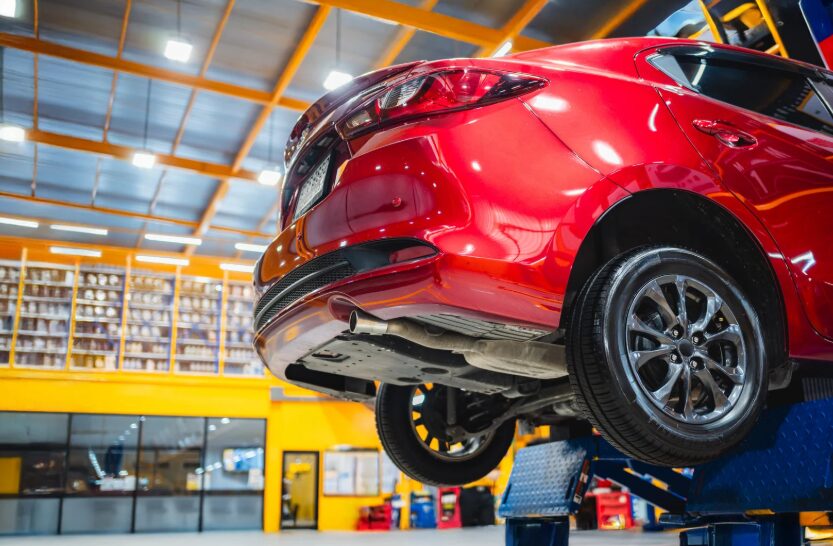

 

What’s the Most Expensive Thing to Repair on a Car

What’s the Most Expensive Thing to Repair on a Car

The engine, transmission, hybrid battery, or electric vehicle (EV) battery can be among the most expensive car components to repair or replace. Depending on the vehicle, failure, labor, and whether the part can be repaired or must be replaced, major automotive repairs can cost anywhere from $1,500 to more than $10,000.

For gasoline-powered vehicles, engine and transmission replacements are often among the most expensive repairs. Engine replacement can commonly cost 3,000–8,000+, while transmission replacement may cost 2,500–7,000+.

For hybrid and electric vehicles, battery replacement can also be extremely expensive. Depending on the vehicle, an EV battery replacement may exceed $10,000.

Most Expensive Car Repairs

Major Repair Approximate Cost
Engine Replacement 3,000–8,000+
Transmission Replacement 2,500–7,000+
EV Battery Replacement 5,000–15,000+
Hybrid Battery Replacement 2,000–8,000+
Engine Rebuild 2,500–6,000+
Major Electrical Repair 1,000–5,000+
Catalytic Converter 1,000–4,000+
Major Suspension Repair 1,000–4,000+
Collision Repairs 5,000–15,000+

These are general estimates. Actual prices vary based on the vehicle, parts availability, labor rates, damage, and whether new, rebuilt, remanufactured, or used parts are used.

Choosing the Right Auto Repair Shop for Your Vehicle

1. Engine Replacement

An engine replacement is often one of the most expensive repairs on a conventional vehicle. The total cost includes the replacement engine, labor, fluids, seals, gaskets, and potentially other components discovered during installation.

Technicians may need to remove the existing engine, transfer compatible components, install the replacement, inspect wiring and connections, refill fluids, and test the vehicle.

Whether an engine replacement is worthwhile depends on the car’s age, mileage, condition, market value, and expected future repairs. A $5,000 repair may make sense for a well-maintained vehicle worth considerably more, but may not make financial sense for a vehicle worth less than the repair.

2. Transmission Replacement

A transmission replacement can also create a major repair bill. Modern transmissions contain complex mechanical and electronic components, and replacement can require significant labor.

However, not every transmission problem requires replacement. The actual problem may involve a sensor, solenoid, valve body, fluid issue, seal, wiring, or control module. Proper diagnosis can determine whether a smaller repair is possible.

3. EV Battery Replacement

For electric vehicles, the high-voltage battery pack is one of the most expensive components. Depending on the vehicle and battery size, replacement can cost several thousand dollars and potentially exceed $10,000.

An EV battery contains numerous cells or modules, electrical components, cooling systems, sensors, and protective structures. Specialized equipment and trained technicians may be required.

Importantly, a battery warning does not always mean the entire pack needs replacement. Depending on the vehicle, individual modules or other components may be repairable.

4. Hybrid Battery Replacement

Hybrid vehicles also use high-voltage battery systems. A hybrid battery replacement can cost approximately 2,000–8,000+, depending on the vehicle and battery configuration.

Before replacing an expensive battery, a qualified technician should determine whether the actual problem is the battery or another part of the hybrid system.

5. Engine Rebuild

An engine rebuild involves disassembling an engine, inspecting internal components, replacing damaged parts, and rebuilding it rather than installing a completely different engine.

Severe problems involving piston rings, bearings, cylinders, crankshafts, valves, overheating, or internal oiling can require a rebuild. Costs commonly range from 2,500–6,000+, depending on damage and machine work required.

6. Major Electrical and Computer Repairs

Modern cars rely on numerous electronic control modules, sensors, wiring systems, cameras, and radar components. Problems involving an engine control module, transmission control module, body control module, wiring harness, or battery management system can cost thousands to diagnose, replace, and program.

A simple sensor may be relatively inexpensive, while a major control module or wiring repair can be much more costly.

7. Catalytic Converter Replacement

A catalytic converter replacement can cost approximately 1,000–4,000+, depending on the vehicle and converter design. Vehicles with multiple converters may cost even more.

It is important to determine why the converter failed. For example, an engine misfire or fuel-related problem can damage a replacement converter if the underlying issue is not fixed.

8. Advanced Driver-Assistance Repairs

Modern vehicles may use cameras, radar, and sensors for features such as automatic emergency braking, adaptive cruise control, lane warnings, blind-spot monitoring, and parking assistance.

Replacing a damaged sensor or camera may require additional calibration. Costs can increase following windshield replacement, suspension repairs, wheel alignment issues, or collision damage.

9. Major Suspension and Steering Repairs

Replacing multiple suspension or steering components can also become expensive. Repairs may involve struts, shocks, control arms, ball joints, wheel bearings, springs, bushings, or steering components.

A major suspension repair can potentially cost 1,000–4,000+, depending on the vehicle and number of parts involved.

10. Extensive Collision Damage

A serious accident can produce one of the largest repair bills of all. Damage may affect body panels, frame structures, suspension, steering, airbags, wiring, sensors, cooling systems, and engine components.

Major collision repairs can cost 5,000–15,000+. If repairs exceed the vehicle’s value, an insurance company may determine that the vehicle is a total loss.

Auto Repairs

What Makes Expensive Car Repairs More Expensive?

Several factors influence the final price:

  • Vehicle make and model: Luxury and specialty vehicles often have more expensive parts.
  • Labor rates: Shops with higher hourly rates will have higher labor costs.
  • Parts availability: Rare or difficult-to-source parts can increase costs.
  • Parts choice: New, remanufactured, rebuilt, or used parts can have different prices.
  • Additional damage: Technicians may discover problems after disassembly.
  • Diagnostic complexity: Difficult-to-find electrical or mechanical problems can require more diagnostic time.

How Do You Know If an Expensive Repair Is Worth It?

Compare the repair cost with the vehicle’s current value, condition, mileage, maintenance history, and expected future repairs.

Also consider the cost of replacing the vehicle. Buying another used car does not necessarily eliminate repair risks.

A well-maintained vehicle may be worth repairing even when the bill is substantial, while an older vehicle with several major problems may not be.

How to Avoid Expensive Automotive Repairs

Following the manufacturer’s maintenance schedule can reduce the risk of major failures. Keep up with oil changes, fluid services, filters, brake inspections, tire maintenance, battery checks, and cooling-system inspections.

Do not ignore warning signs such as:

  • Check engine lights
  • Overheating
  • Fluid leaks
  • Strange noises
  • Vibrations
  • Burning smells
  • Difficulty starting
  • Reduced performance
  • Transmission problems

Early diagnosis may prevent a smaller problem from becoming a much larger repair.

Should You Get a Second Opinion?

For an expensive engine, transmission, battery, or electrical repair, getting a second professional opinion can be worthwhile.

Ask the repair shop for a written explanation of the failed component, evidence supporting the diagnosis, recommended repair, labor and parts costs, warranty, and available alternatives.

Comparing complete estimates—not just hourly labor rates—can help you make a better decision.

Frequently Asked Questions

What is usually the most expensive repair on a car?

Engine replacement, transmission replacement, hybrid battery replacement, and EV battery replacement can all be among the most expensive repairs. Some major repairs can exceed $10,000.

How much does a transmission replacement cost?

A transmission replacement commonly costs around 2,500–7,000+, depending on the vehicle, transmission, labor, and replacement unit.

How much does an EV battery replacement cost?

EV battery replacement can cost several thousand dollars and may exceed $10,000, although some battery problems may be repairable without replacing the entire pack.

Should I repair my car if the repair costs more than it is worth?

Not necessarily. Consider the vehicle’s overall condition, reliability, maintenance history, replacement cost, and likelihood of additional repairs before deciding.

Conclusion

So, what’s the most expensive thing to repair on a car? For conventional vehicles, an engine or transmission replacement is often among the largest repair expenses. For hybrids and EVs, high-voltage battery replacement can be extremely expensive, while major collision damage can potentially cost even more.

Before approving a major repair, get a detailed estimate, confirm the diagnosis, ask about parts and warranty options, and consider a second opinion.

Need Auto Repair in Plainfield, IL?

If your car or truck is experiencing a major problem, Last Chance Auto Repair For Cars Trucks in Plainfield, IL can help diagnose the issue and determine what repairs may be needed.

Call Last Chance Auto Repair For Cars Trucks at 815-577-0327 for Car Repair, Car Repair Plainfield IL, Car Repair Near Me, Auto Repair, Auto Repair Near Me, Automotive Repair, Brake Shop, Brake Repair, Brake Repair Plainfield IL, and Brake Service. Contact the team today for dependable local automotive service and a professional evaluation of your vehicle.


Is $100 an Hour Fair for Mechanic Labor?

Is $100 an Hour Fair for Mechanic Labor?

Yes, $100 an hour is generally a fair mechanic labor rate and can be below what many professional auto repair shops charge in the United States. General repair shops commonly charge around $110 to $170+ per labor hour, while dealerships and specialty shops can charge $150 to $250 or more.

However, the hourly rate alone does not determine whether a repair is fairly priced. The total cost also depends on the vehicle, repair complexity, diagnostic work, parts, location, technician experience, and whether the shop uses hourly or flat-rate labor.

What Does a Mechanic Labor Rate Mean?

A mechanic labor rate is what a repair shop charges for each billable hour of technician work.

At a $100-per-hour labor rate, two hours of labor would cost:

$100 × 2 = $200

The technician does not necessarily receive the full $100. The shop’s labor rate also covers expenses such as:

  • Technician wages and benefits
  • Diagnostic equipment and specialized tools
  • Rent, utilities, and insurance
  • Repair software and databases
  • Employee training
  • Equipment maintenance
  • Administrative expenses
  • Business overhead

Therefore, a $100 shop rate is not the same as a mechanic earning $100 per hour.

Auto Repair Shop

Typical Mechanic Labor Rates

Labor rates vary significantly by location and type of repair facility.

Repair Facility Typical Labor Rate
Small independent shop 100–145/hour
General repair shop 110–170+/hour
Dealership 150–250+/hour
Specialty European shop 150–200/hour
EV or advanced vehicle specialist 150–200/hour
Mobile mechanic 100–200/hour

These are general ranges, not fixed national prices. A $100 rate may be competitive in one area and less competitive in another.

Why Does Auto Repair Labor Cost So Much?

Modern vehicles require sophisticated diagnostic equipment and highly trained technicians. Today’s technicians may work with computerized systems, advanced driver-assistance systems, hybrid and electric vehicle technology, electrical systems, transmissions, and manufacturer-specific software.

Professional diagnostic tools and software can cost thousands of dollars and often require subscriptions or updates.

Repair shops also have significant operating expenses, including facilities, insurance, utilities, equipment, waste disposal, software, training, and employee wages. The labor rate helps cover these costs while allowing the business to remain profitable.

Independent Shop vs. Dealership

Independent repair shops often have lower labor rates than dealerships, although this is not always the case.

An independent shop may provide:

  • Competitive pricing
  • Personalized service
  • Experienced technicians
  • Flexible repair options
  • Service for multiple vehicle brands

Dealerships typically have higher labor rates but may be preferable for warranty work, recalls, manufacturer-specific diagnostics, software updates, programming, and specialized factory procedures.

A higher dealership rate does not automatically mean better service, just as a lower independent-shop rate does not automatically mean lower quality.

Flat-Rate Labor vs. Hourly Labor

Many repair shops use flat-rate or book-time labor rather than charging strictly for the amount of time a technician spends on a repair.

For example, if a repair is assigned three labor hours and the shop charges $100 per hour:

3 × $100 = $300

You may be billed $300 even if an experienced technician completes the job in two hours. Standardized labor times make pricing more predictable for common repairs.

This is why comparing labor hours is just as important as comparing the hourly rate.

What Determines Whether $100 an Hour Is Fair?

Consider these factors before deciding whether a shop’s rate is reasonable:

Location

Labor rates are usually higher in areas with greater operating costs.

Vehicle Type

Luxury, European, hybrid, and electric vehicles may require specialized tools, software, and training.

Repair Complexity

A simple brake repair generally requires less labor than diagnosing an intermittent electrical problem.

Technician Experience

A highly skilled technician may diagnose and repair a problem faster, making a higher hourly rate worthwhile.

Diagnostic Work

Finding the cause of a problem can take more time than replacing a known faulty component.

Warranty

A clear parts-and-labor warranty can add value to a repair and justify a somewhat higher rate.

How Much Does Labor Cost at $100 an Hour?

Labor Time Labor Cost
0.5 hour $50
1 hour $100
1.5 hours $150
2 hours $200
3 hours $300
4 hours $400
5 hours $500
6 hours $600

These amounts represent labor only. Parts, diagnostic fees, shop supplies, taxes, disposal fees, and programming may increase the final invoice.

Is $100 an Hour Too Expensive?

Not necessarily. In many markets, $100 per hour is competitive.

The better question is: What are you getting for that $100 per hour?

For example, Shop A might charge $90 per hour but estimate six hours of labor, while Shop B charges $120 but estimates four hours.

  • Shop A: $90 × 6 = $540
  • Shop B: $120 × 4 = $480

The shop with the higher hourly rate actually has the lower labor bill.

How to Tell If a Mechanic’s Estimate Is Fair

Ask for a written estimate and compare the complete repair, not just the hourly rate.

Ask:

  • What is the labor rate?
  • How many labor hours are estimated?
  • Is the repair hourly or flat-rate?
  • What parts will be used?
  • Is there a diagnostic fee?
  • Is the diagnostic fee applied toward the repair?
  • What warranty is provided?
  • Will additional work require my approval?

When comparing shops, review labor, parts, diagnostic fees, warranty coverage, and the exact scope of work.

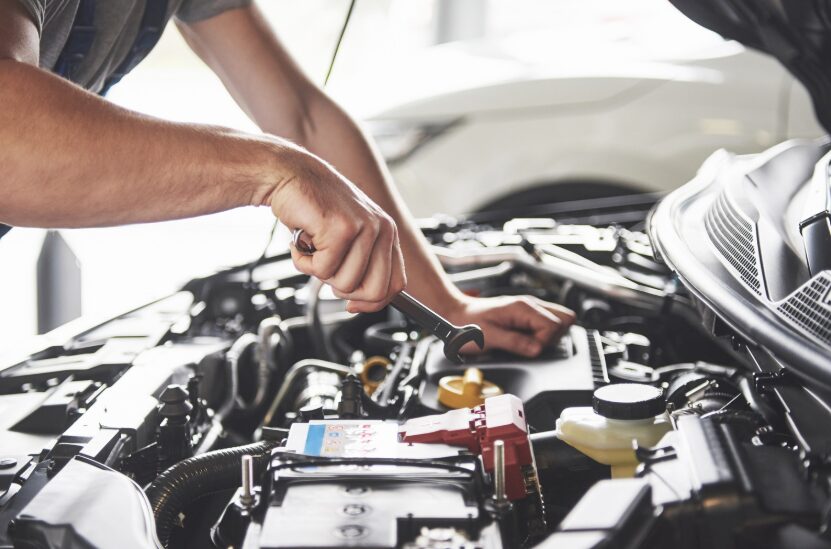
Auto Repair Shop

How to Save Money on Mechanic Labor

You do not always need the cheapest hourly rate. Instead:

  • Get a written estimate.
  • Compare multiple shops for expensive repairs.
  • Ask about diagnostic fees.
  • Address warning lights, leaks, noises, and other problems early.
  • Follow your vehicle’s recommended maintenance schedule.
  • Ask what parts are being installed and what warranty they carry.

Preventive maintenance cannot eliminate every repair, but it can help identify problems before they become more expensive.

When Should You Question a $100 Labor Rate?

The $100 rate itself is not a warning sign. Be more concerned if:

  • Labor hours are unexplained.
  • The diagnosis is unclear.
  • Charges appear without approval.
  • Parts pricing is not explained.
  • The estimate changes significantly without authorization.
  • The shop provides no clear warranty.
  • You feel pressured to approve unnecessary work.

Transparency is more important than simply finding the lowest hourly rate.

Frequently Asked Questions

Is $100 an hour expensive for a mechanic?

No. A $100 hourly labor rate can be fair or even competitive, depending on the local market, vehicle, and repair.

How much do mechanics usually charge per hour?

Many general repair shops charge roughly $110 to $170+ per hour, while dealerships and specialty facilities can charge $150 to $250 or more.

Why do mechanics charge $100 or more per hour?

The rate covers technician wages as well as equipment, training, insurance, rent, software, utilities, and other business expenses.

Is a dealership more expensive than an independent mechanic?

Often, yes. Dealerships generally have higher labor rates, although they may provide specialized manufacturer equipment, diagnostics, programming, and warranty services.

Do mechanics charge for diagnosis?

Many shops charge a separate diagnostic fee because diagnosing a problem requires technician time and specialized equipment. Ask whether the fee is credited toward an approved repair.

How can I know if an auto repair estimate is fair?

Compare the total estimate, including labor hours, parts, diagnostic fees, warranty coverage, and the scope of work. For expensive repairs, getting a second estimate can be worthwhile.

Conclusion

$100 per hour is generally a fair mechanic labor rate and may be below the rate charged by many professional repair facilities. What matters most is the total repair cost and the value you receive.

A qualified technician who accurately diagnoses a problem and completes the repair efficiently can provide better value than a shop advertising a lower hourly rate but requiring substantially more labor.

For drivers in Plainfield, IL, getting a clear diagnosis, written estimate, and explanation of the recommended repair can make the auto repair process more predictable.

Need Reliable Auto Repair in Plainfield, IL?

Last Chance Auto Repair For Cars Trucks in Plainfield, IL provides professional automotive service and repair. Whether you need routine maintenance, brake service, diagnostics, or a more involved repair, a professional evaluation can help determine what your vehicle needs and why.

Call Last Chance Auto Repair For Cars Trucks at 815-577-0327 for assistance with Car Repair, Car Repair Plainfield IL, Car Repair Near Me, Auto Repair, Auto Repair Near Me, Automotive Repair, Brake Shop, Brake Repair, Brake Repair Plainfield IL, and Brake Service.
  • « Previous Page
  • 1
  • …
  • 20
  • 21
  • 22
  • 23
  • 24
  • …
  • 99
  • Next Page »

Reviews

[RICH_REVIEWS_SHOW category=”Auto Repair In Plainfield” num=”3″]
[RICH_REVIEWS_SNIPPET category=”all”]

Facebook Posts

Last Chance Auto Repair For Cars Trucks is at Last Chance Auto Repair For Cars Trucks.

4 weeks ago

Last Chance Auto Repair For Cars Trucks
Need a safe place to store your vehicle in Plainfield, IL? Last Chance Auto Repair For Cars Trucks offers convenient automobile storage right on Naper Plainfield Road.

From classic cars and muscle cars to hot rods, collector vehicles, seasonal rides, project cars, extra vehicles, and cars you do not have room for at home, we can help keep your vehicle stored locally and conveniently. Our shop is easy to reach from Plainfield, Naperville, Bolingbrook, Romeoville, Joliet, Aurora, Chicago, and surrounding Chicagoland communities.

For decades, Last Chance Auto Repair has been trusted for auto repair, maintenance, diagnostics, vehicle care, and storage solutions. If you are looking for car storage in Plainfield, IL, automobile storage near Naperville, or vehicle storage on Naperville Plainfield Road, give us a call today.

Automobile storage details:
www.lastchanceautorepairs.com/automobile-storage/

Google post:
posts.gle/jvjtbyobYwEzbXPE8

Facebook post:
www.facebook.com/share/p/1Ei9A1nrni/

YouTube Short:
youtube.com/shorts/_sCFb9xGIDA?is=qSQndc5nIvBY0vwb

Last Chance Auto Repair For Cars Trucks
12052 S Naper Plainfield Rd
Plainfield, IL 60585
815-577-0327

#carstorageplainfieldil #automobilestorage #vehiclestorage #classiccarstorage #LastChanceAutoRepair
...

Video

View on Facebook (opens in a new tab)
· Share

Share on Facebook (opens in a new tab) Share on Twitter (opens in a new tab) Share on LinkedIn (opens in a new tab) Share by Email (opens in a new tab)

Last Chance Auto Repair For Cars Trucks

4 weeks ago

Last Chance Auto Repair For Cars Trucks
Need car storage in, near, around Plainfield, IL? 🚗🔒

Last Chance Auto Repair offers automobile storage right on Naper Plainfield Road for drivers who need a safe, convenient place to keep their vehicle. Need storage?

Whether you have a classic car, hot rod, muscle car, seasonal vehicle, extra car, project car, or a vehicle you simply need stored for a while, our family-owned shop is here to help. We’ve been serving Plainfield, Naperville, Bolingbrook, Romeoville, Chicago, and surrounding Chicagoland communities since 1978 with trusted auto repair, maintenance, diagnostics, and dependable vehicle storage solutions.

If you’re looking for car storage in Plainfield, IL, vehicle storage near Naperville, or automobile storage on Naperville Plainfield Road, give Last Chance Auto Repair a call today.

More about car storage at Last Chance in Plainfield, IL:
www.lastchanceautorepairs.com/automobile-storage

Google post / more details:
posts.gle/jvjtbyobYwEzbXPE8

Last Chance Auto Repair
For Cars Trucks
12052 S Naper Plainfield Rd
Plainfield, IL 60585
815-577-0327

#CarStorage #CarStoragePlainfieldIL #VehicleStorage #AutomobileStorage #ClassicCarStorage #HotRodStorage #MuscleCarStorage #PlainfieldIL #NapervilleIL #LastChanceAutoRepair
...

Automobile Storage in Plainfield, IL | Secure & Affordable24

www.lastchanceautorepairs.com

Looking for reliable automobile storage in Plainfield, IL? Our secure and affordable facility offers 24/7 protection, easy access...
View on Facebook (opens in a new tab)
· Share

Share on Facebook (opens in a new tab) Share on Twitter (opens in a new tab) Share on LinkedIn (opens in a new tab) Share by Email (opens in a new tab)

Last Chance Auto Repair For Cars Trucks is at Last Chance Auto Repair For Cars Trucks.

1 month ago

Last Chance Auto Repair For Cars Trucks
Honest service. Fair prices. Quality repairs. Every time. Call our team today 🚗🔧!

At Last Chance Auto Repair For Cars Trucks in Plainfield, IL, we’re here to make auto repair simple, straightforward, and stress-free. No surprises. No upselling. Just dependable diagnostics, clear communication, and repairs you can feel confident about.

Whether your vehicle needs engine repair, brake service, suspension and steering repair, electrical diagnostics, oil changes, A/C and heating service, or routine maintenance, our team is ready to help keep you safely on the road. How may we help you?

✅ Honest diagnostics
✅ Quality repairs
✅ Fair prices
✅ Customer-focused service
✅ Family owned and operated since 1978

Serving Plainfield, Naperville, Bolingbrook, Romeoville, Chicago, and surrounding Chicagoland communities.

Auto repair you can count on in Plainfield, IL:
www.lastchanceautorepairs.com/ #AutoRepairNearMe

Google Maps, reviews, hours, directions & more:
www.google.com/maps?cid=3195904950708136624

Last Chance Auto Repair
For Cars Trucks
12052 S Naper Plainfield Rd
Plainfield, IL 60585
815-577-0327

#LastChanceAutoRepair #AutoRepairPlainfieldIL #MechanicPlainfieldIL #BrakeRepair #EngineRepair #SuspensionRepair #CarRepairShop #PlainfieldIL #NapervilleIL #BolingbrookIL
...

Call Now

Video

View on Facebook (opens in a new tab)
· Share

Share on Facebook (opens in a new tab) Share on Twitter (opens in a new tab) Share on LinkedIn (opens in a new tab) Share by Email (opens in a new tab)

Best Auto Repair Shop in Plainfield, IL

Recent Posts

  • What Are Common Auto Repair Shop Services?
  • What Are Signs I Need an Auto Repair Shop?
  • Does an Auto Repair Shop Offer Tire Services?
  • Can an Auto Repair Shop Repair Suspension Problems?
  • Which Part of a Car Is Most Expensive to Fix?

Contact Us

12052 S Naper Plainfield Rd
Plainfield, IL 60585
(815) 577-0327
info@lastchanceautorepairs.com

Contact Us

12052 S Naper Plainfield Rd
Plainfield, IL 60585
(815) 577-0327
info@lastchanceautorepairs.com

Service Area

Plainfield, 60585, 60544, 60586, Naperville, 60564, Bolingbrook, 60490, 60440, Romeoville, 60446, Will, Kendall, DuPage, Counties. Our auto repair shop in Plainfield, IL, has been serving the local area plus all surrounding Chicagoland since 1978.

Learn About Naperville, IL

Learn About Plainfield, Illinois

Specialties

• Computer Diagnostic • Brake Shop • Engine Replacement • Transmission Rebuild • Clutch Replacement • Differential Rebuild • Suspension Shop • Steering • Shocks & Struts • Heating & Cooling • Electrical • Exhaust Shop • Catalytic Converter Replacement • Alignment • Domestic & Foreign Vehicle Service • Auto Repair In Plainfield, IL • Auto Repair Shops Near Me • Towing Service Near Me

Last Chance Auto Repair In Plainfield, IL | Copyright © 1978 - 2026 | All Rights Reserved | (815) 577-0327