Last Chance Auto Repair

Auto Repair Shop In Plainfield, IL

Auto Repair Shop In Plainfield, IL

Auto Repair In Plainfield At Its Finest. Serving Plainfield, Naperville, Bolingbrook, Romeoville, Chicagoland since 1978.

  • Services
        • Brake Repair
          • Brakes Near Me
          • Brakes Plainfield
          • Brakes Naperville
          • Brakes Bolingbrook
          • Brake Rotor Replacement
          • Save On Brakes
        • Emissions Repair
        • Asian Repair
        • European Repair
        • Classic & Vintage
        • Truck Repair
          • Medium Duty Repair
        • Fleet Repair
        • Charging System Repair
          • Alternator Repair
          • Alternator Replacement
        • A/C Repair
          • A/C Recharge Service
          • A/C Condenser Repair
          • A/C Compressor Repair
        • Cooling System
          • Radiator Services
          • Water Pump Replacement
          • Thermostat Replacement
        • Steering System
        • Auto Maintenance
          • Auto Tune-Up
          • Oil Change
          • Batteries
        • Engine Services
          • Starter Replacement
          • Timing Belt Replacement
          • Timing Chain Replacement
          • Cylinder Heads
          • Auto Machine Shop
        • Transmissions
          • Clutch Replacement
          • Torque Converter Replacement
        • Transfer Cases
        • Carburetors
        • Driveshaft Service
        • Diesel Repair
        • Electrical Repair
        • Suspension Repair
          • Shocks & Struts
          • Ball Joint Replacement
          • Alignment Shop
        • Exhaust Repair
          • Catalytic Converter
        • Differential Repair
        • Diagnostic
        • Auto Glass Repair
        • Auto Body Shop
        • Welding Service
        • Vehicle Inspection
        • Tire Replacement
  • Vehicles
          • DOMESTIC
          • Buick Repair
          • Cadillac Repair
          • Chevrolet Repair
          • Corvette Repair
          • Dodge Repair
          • Ford Repair
          • GMC Repair
          • Hummer Repair
          • Jeep Repair
          • RAM Repair
          • ASIAN
          • Acura Repair
          • Daewoo Repair
          • Honda Repair
          • Hyundai Repair
          • Infiniti Repair
          • Isuzu Repair
          • KIA Repair
          • Lexus Repair
          • Mazda Repair
          • Nissan Repair
          • Mitsubishi Repair
          • Scion Repair
          • Subaru Repair
          • Suzuki Repair
          • Toyota Repair
          • EUROPEAN
          • BMW Repair
          • Fiat Repair
          • Jaguar Repair
          • Land Rover Repair
          • Mercedes Benz Repair
          • MINI Cooper Repair
          • Porsche Repair
          • Saab Repair
          • Smart Repair
          • Volkswagen Repair
          • Volvo Repair
  • Towing
        • 24 Hour Towing
        • Towing Plainfield
        • Towing Bolingbrook
        • Roadside Assistance
        • Lockout Service
        • Jump Start Service
        • Mobile Battery Replacement
        • Toolbox Towing
  • Storage
    • Outdoor Car Storage
  • Coupons
        • Low Cost Guaranteed
        • Transmissions
        • Free Brake Inspection
        • Air Conditioning
        • Oil Change Specials
        • Free Computer Scan
        • Teacher Discount
        • Senior Citizen Discount
  • Blog
  • About Us
    • Reviews
    • Now Hiring
    • Car Mechanic Jobs Near Me
    • Brake Repair FAQs
  • Contact Us
  • Write A Review

Can an Auto Repair Shop Repair Suspension Problems?

Can an Auto Repair Shop Repair Suspension Problems?

A vehicle’s suspension system is essential for a smooth, stable, and controlled ride. When suspension components become worn or damaged, drivers may notice unusual noises, uneven tire wear, steering problems, or excessive bouncing. An Auto Repair Shop can inspect these symptoms, identify the cause, and repair or replace the affected components.

Suspension problems should not be ignored because they can affect steering, braking, tire contact, and vehicle stability. Addressing problems early may also prevent additional wear and more expensive repairs. Understanding common suspension issues can help vehicle owners recognize warning signs and know when professional service is needed.


What Does the Suspension System Do?

The suspension system connects the wheels to the vehicle and helps control how the car responds to bumps, turns, braking, and acceleration. It also helps keep the tires in contact with the road for proper traction and handling.

Common suspension components include shocks, struts, springs, control arms, ball joints, bushings, and sway bar links. Each component has a specific function, but they work together to provide stability and comfort.

Shocks and struts control bouncing and help prevent excessive vehicle movement. Springs support the vehicle’s weight and allow the wheels to move over uneven surfaces.

Other components help keep the wheels properly positioned while absorbing vibrations. Because several parts work together, a professional inspection is often necessary to determine the exact source of a suspension problem.

What Are Common Signs of Suspension Problems?

Suspension problems can produce several noticeable warning signs. Excessive bouncing after driving over a bump may indicate worn shocks or struts, while excessive body movement during turns can also point to suspension wear.

Unusual sounds are another common symptom. Clunking, knocking, squeaking, or rattling underneath the vehicle may indicate worn bushings, sway bar links, ball joints, or other components.

Uneven tire wear can also be connected to suspension problems. If the tires are not maintaining proper contact with the road, certain areas may wear faster than others.

Drivers may also notice that the vehicle pulls to one side, feels unstable, or handles differently than it did previously. A vehicle sitting lower on one side could indicate a damaged or weakened spring.

These symptoms should not be ignored. A professional inspection can determine whether the problem is caused by suspension components, wheel alignment, tires, or another vehicle system.
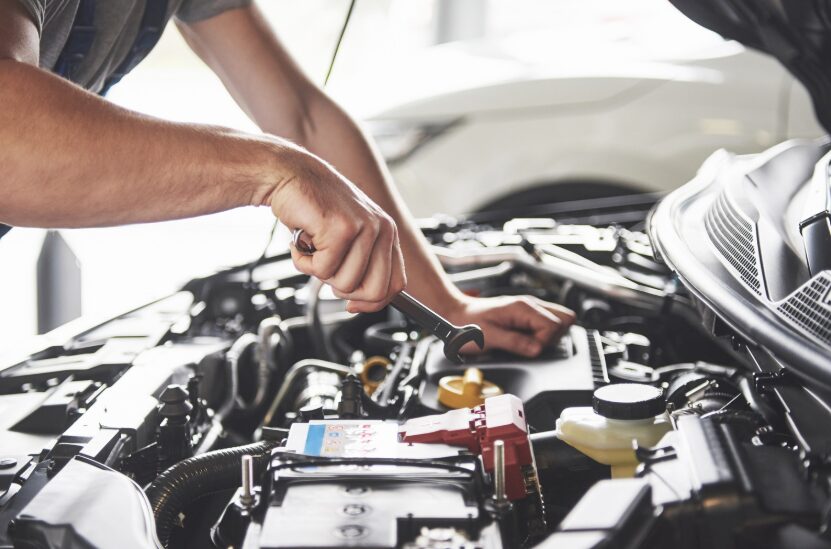
Close-up of a mechanic's hands using a wrench to repair or maintain an open car engine bay next to the vehicle battery.

Can an Auto Repair Shop Diagnose Suspension Damage?

Yes, an experienced Auto Repair Shop can diagnose many types of suspension problems. The process usually begins by discussing the symptoms with the vehicle owner and then performing a detailed inspection.

A technician can check shocks, struts, springs, control arms, ball joints, bushings, and sway bar components for excessive wear or damage. The vehicle may need to be lifted to inspect parts that cannot be properly evaluated from the ground.

A road test can also help identify handling problems and unusual noises. During the test, a technician may evaluate steering response, bouncing, body movement, and sounds occurring over bumps or during turns.

Proper diagnosis is important because different suspension problems can produce similar symptoms. Replacing a part without identifying the actual cause may fail to resolve the issue.

Once the problem is identified, the technician can explain which components need attention and whether additional services, such as a wheel alignment, may be necessary.

Which Suspension Components Can Be Repaired or Replaced?

An Auto Repair Shop can repair or replace many suspension components depending on the vehicle and condition of the parts. Shocks and struts are among the most commonly replaced suspension components because they gradually wear with mileage.

Springs can also weaken or break. A damaged spring can change the vehicle’s ride height and affect handling. Control arms and bushings may develop excessive movement, causing vibrations, noises, or unstable handling.

Ball joints can wear and develop unwanted play, which may affect wheel positioning and vehicle control. Sway bar links and bushings can also become worn and create knocking or rattling sounds.

Not every suspension problem requires replacing multiple components. Sometimes only one damaged part needs to be replaced. However, if several components show significant wear, replacing related parts may provide a more reliable repair.

The correct repair depends on the vehicle, manufacturer specifications, mileage, driving conditions, and results of the inspection.

How Long Do Suspension Repairs Take?

Suspension repair times vary depending on the vehicle and the components involved. Replacing a relatively accessible part may take less time than repairing several suspension components.

Replacing shocks or struts may require removing surrounding parts before the new components can be installed correctly. Control arms, springs, and ball joints can also require additional labor.

Rust and seized hardware may make some repairs more difficult, particularly on older vehicles or those regularly exposed to harsh road conditions.

A wheel alignment may also be recommended after certain suspension repairs. The exact service time should be discussed with the technician after the vehicle has been inspected.

The priority should always be completing the repair correctly rather than rushing the job. Proper installation and testing help ensure the vehicle is safe and performs as expected.

Why Is Suspension Repair Important for Safety?

Suspension components affect how a vehicle responds when steering, braking, accelerating, and driving over uneven roads. Excessively worn parts can make the vehicle feel less stable and predictable.

Damaged suspension components can also affect tire contact with the road. Reduced or inconsistent contact may affect traction, particularly during sudden steering maneuvers or on rough surfaces.

Suspension problems may contribute to uneven tire wear as well. This can shorten tire life and create an unnecessary expense for the vehicle owner.

Some suspension problems can also place additional stress on related steering and suspension components. Addressing the issue early can help prevent further damage.

If you notice sudden changes in ride height, severe pulling, a broken spring, or unusual movement while braking, have the vehicle inspected promptly. Suspension problems can become more serious when left unresolved.
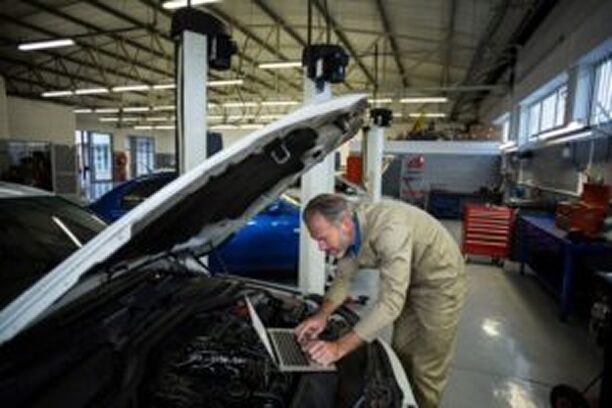
An auto mechanic leaning over an open car hood using a laptop computer to run a check inside a brightly lit vehicle repair garage.

Does Suspension Repair Require a Wheel Alignment?

A wheel alignment may be necessary after certain suspension repairs, but it is not required after every repair. It depends on which components were replaced or adjusted.

Parts such as control arms can influence wheel positioning. Replacing these components may change alignment angles, making an alignment service appropriate.

Incorrect alignment can cause pulling, an off-center steering wheel, and uneven tire wear. Proper alignment helps the tires contact the road correctly and can improve handling.

Some shock or strut repairs may have less impact on alignment, depending on the vehicle’s suspension design. A technician can determine whether an alignment check or adjustment is recommended.

Maintaining correct alignment after suspension work can help protect your tires and newly installed components while improving overall driving performance.

When Should You Get Suspension Service?

You should consider suspension service when you notice unusual noises, excessive bouncing, uneven tire wear, changes in ride height, or handling problems. Waiting until a component completely fails can increase the risk of additional damage.

Regular inspections can also help identify worn parts before they create major problems. Suspension components experience repeated stress from potholes, rough roads, heavy loads, and normal driving.

An Auto Repair Shop can determine whether unusual symptoms are related to suspension components, steering, tires, or alignment. This professional diagnosis helps ensure the correct repair is performed.

If your vehicle suddenly feels unstable or difficult to control, have it inspected as soon as possible. Prompt service can help maintain safe handling and prevent minor wear from becoming a larger repair.

Conclusion

Suspension problems can affect ride comfort, steering, tire wear, braking, and vehicle stability. A qualified Auto Repair Shop can inspect components such as shocks, struts, springs, control arms, ball joints, and bushings to determine what needs to be repaired or replaced.

If your vehicle is bouncing excessively, making unusual noises, pulling to one side, or showing uneven tire wear, professional inspection is a smart next step. For suspension and automotive service in Plainfield, Last Chance Auto Repair For Cars Trucks can help diagnose vehicle problems and recommend the appropriate repairs.

To discuss your vehicle’s suspension concerns or schedule service, contact Last Chance Auto Repair For Cars Trucks at +1 815-577-0327.


https://www.buzzsprout.com/2649409/episodes/19767896 

https://www.podomatic.com/podcasts/emonmd9195podcast/episodes/2026-09-07T11_30_26-07_00

https://stream.redcircle.com/episodes/6b343685-1399-4904-a14d-775dcf5a2d1a/stream.mp3

Which Part of a Car Is Most Expensive to Fix?

Which Part of a Car Is Most Expensive to Fix?

The engine and transmission are generally the most expensive parts of a car to repair or replace. Major engine repairs or replacements can cost several thousand dollars, while transmission repairs, rebuilds, or replacements can also be expensive. On hybrid and electric vehicles, the high-voltage battery may be one of the costliest components.

Actual repair costs depend on the vehicle, damage, labor, parts, and whether the component can be repaired rather than replaced.

Auto Repairs

What Is the Most Expensive Part of a Car to Fix?

For most gasoline-powered vehicles, the engine and transmission are among the most expensive systems to repair.

Car Part/System Potential Cost*
Engine $3,000–$12,000+
Transmission $2,500–$8,000+
Hybrid/EV battery $3,000–$15,000+
Turbocharger $1,500–$5,000+
Steering system $800–$3,000+
Electrical modules $500–$5,000+
A/C system $500–$3,000+
Suspension $500–$3,000+

*These are broad estimates. Actual prices vary by vehicle, location, parts, labor, and diagnosis.

1. The Engine

The engine is often one of the most expensive components because it contains many complex parts operating under high heat and pressure.

Major problems can include:

  • Bearing or piston failure
  • Valve damage
  • Severe overheating
  • Timing-system failure
  • Head-gasket damage
  • Oil starvation
  • Internal engine wear

Minor problems may cost hundreds of dollars, while major internal repairs can reach several thousand. Engine replacement can exceed $10,000 on some vehicles.

2. The Transmission

The transmission transfers engine power to the wheels and contains numerous gears, clutches, bearings, seals, solenoids, and electronic components.

A serious transmission failure may require a component repair, rebuild, remanufactured unit, or complete replacement. The best option depends on the vehicle, mileage, damage, and technician’s diagnosis.

3. Hybrid and EV Batteries

Hybrid and electric vehicles have high-voltage battery systems that can be extremely expensive to replace. These systems contain multiple cells or modules and sophisticated battery-management and cooling systems.

A battery warning does not automatically mean the entire battery must be replaced. Depending on the failure, individual modules, connections, wiring, cooling components, or electronics may be repairable.

4. Turbochargers

Turbochargers operate at extremely high temperatures and speeds, making failures potentially expensive. Repairs may involve the turbocharger, oil or coolant lines, intercooler, sensors, exhaust components, and gaskets.

Access can also increase labor costs, particularly when surrounding components must be removed.

5. Steering Components

Major steering repairs can include the steering rack, tie rods, steering shaft, power-steering pump, or electronic steering components.

Because steering directly affects vehicle control, symptoms such as excessive looseness, unusual effort, vibration, or inconsistent steering should be inspected promptly.

6. Advanced Electrical Systems

Modern vehicles rely on computers, sensors, wiring, and control modules. Electrical problems can range from inexpensive repairs to costly diagnostic and module-replacement work.

Potential issues include:

  • Damaged wiring
  • Failed sensors
  • Control modules
  • Poor grounds
  • Communication faults
  • Charging-system problems
  • Security-system issues

Why Diagnostics Matter

Replacing parts based only on symptoms can quickly become expensive. A vehicle that won’t start could have a battery, starter, alternator, wiring, fuel, ignition, sensor, security, or computer problem.

Proper testing helps identify the actual cause before expensive parts are replaced.

7. Air Conditioning Components

Major A/C repairs can also reach four figures. Common failures involve the compressor, condenser, evaporator, expansion valve, refrigerant lines, or electrical controls.

Some components are difficult to access. For example, replacing an evaporator may require significant dashboard or interior disassembly.

8. Suspension Systems

Individual suspension components may be affordable, but replacing several worn parts can create a substantial bill.

Common components include:

  • Struts and shocks
  • Control arms
  • Ball joints
  • Bushings
  • Springs
  • Sway-bar links
  • Wheel bearings

Suspension repairs become increasingly common as vehicles accumulate mileage.

What Determines Car Repair Costs?

The part itself isn’t the only factor that determines the final bill.

Labor

A relatively inexpensive part can become costly when several hours are required to access and install it.

Parts

OEM, aftermarket, remanufactured, and used parts can have significantly different prices.

Vehicle Design

Two vehicles can require completely different amounts of labor for the same type of repair.

Diagnosis

Complex problems may require specialized diagnostic equipment and additional labor.

Programming and Calibration

Some electronic components must be programmed or calibrated after installation.

Is the Most Expensive Part Always the Most Important?

Not necessarily. Brakes, steering, tires, and suspension may cost less than an engine or transmission but are critical to vehicle safety.

Never ignore a safety-related problem simply because another repair would cost more.

Should You Repair or Replace a Car?

An expensive repair doesn’t automatically mean you should replace the vehicle.

Repairing may make sense when:

  • The vehicle is otherwise reliable
  • The body is in good condition
  • Maintenance history is strong
  • The repair is isolated
  • The vehicle still meets your needs

Replacing may make more sense when:

  • Several major systems are failing
  • Repair costs keep increasing
  • Severe structural rust is present
  • Reliability is poor
  • More major repairs are expected
  • Repair costs approach the vehicle’s practical value

For example, spending $5,000 to repair a dependable vehicle worth $15,000 may make sense if the rest of the car is healthy. The same $5,000 repair on a $4,000 vehicle that also needs a transmission and suspension work requires more careful consideration.

How to Evaluate a Major Repair Estimate

Before approving an expensive repair, ask:

  1. What exactly failed?
  2. How was the problem diagnosed?
  3. Which parts are being replaced?
  4. How much is labor?
  5. Are there other problems that need attention?
  6. What warranty covers the parts and labor?

An itemized estimate and proper diagnosis can help you avoid unnecessary expenses.

How to Prevent Expensive Repairs

Preventive maintenance can help reduce the risk of major failures. Follow the manufacturer’s recommendations for oil changes, fluids, filters, spark plugs, belts, brakes, tires, battery maintenance, and cooling-system service.

Also address warning signs quickly, including:

  • Overheating
  • Fluid leaks
  • Strange noises
  • Warning lights
  • Poor shifting
  • Starting problems
  • Brake or steering changes

Early diagnosis may prevent a smaller problem from becoming a major repair.

Choosing the Right Auto Repair Shop for Your Vehicle

Frequently Asked Questions

Which part of a car is most expensive to fix?

The engine and transmission are generally among the most expensive components on conventional vehicles. Major repairs or replacements can cost several thousand dollars.

Is the engine the most expensive part of a car?

The engine is often one of the most expensive, but a transmission or hybrid/EV battery can cost as much or more depending on the vehicle and failure.

What car part costs the most to replace?

Engine assemblies, transmissions, and certain hybrid or EV battery systems are among the most expensive replacement components. Costs vary by vehicle and damage.

Is a $5,000 car repair worth it?

It can be if the vehicle is reliable, worth considerably more than the repair, and otherwise in good condition. Multiple upcoming repairs can make replacement a better option.

What is the most expensive repair on an electric car?

The high-voltage battery system can be one of the most expensive EV repairs. However, not every battery problem requires complete battery replacement.

How can I avoid expensive car repairs?

Follow the recommended maintenance schedule and address warning lights, leaks, overheating, unusual noises, shifting problems, and other symptoms promptly.

Conclusion

So, which part of a car is most expensive to fix? For most conventional vehicles, the engine and transmission are generally the most expensive major components to repair or replace. Hybrid and electric vehicles can also have significant battery-related repair costs.

Before approving a major repair, consider the vehicle’s value, mileage, maintenance history, overall condition, current repair cost, and potential future repairs. A major repair may be worthwhile if the vehicle is otherwise dependable.

If your vehicle has engine trouble, transmission symptoms, brake problems, suspension issues, overheating, warning lights, steering concerns, A/C problems, or unusual noises, professional diagnostics can help determine the cause and your repair options.

For Car Repair Plainfield IL, Car Repair Near Me, Auto Repair, Auto Repair Near Me, Automotive Repair, Brake Shop, Brake Repair, Brake Repair Plainfield IL, or Brake Service, contact Last Chance Auto Repair For Cars Trucks in Plainfield, IL.

Call 815-577-0327 for professional car and truck diagnostics, maintenance, brake service, and automotive repair.

What Is the Most Expensive Thing to Fix on a Car?

What Is the Most Expensive Thing to Fix on a Car?

The engine and transmission are generally the most expensive major components to repair or replace on a car. Severe engine failure or complete transmission replacement can cost several thousand dollars, with some repairs exceeding $10,000. For hybrid and electric vehicles, the high-voltage battery can also be among the most expensive components.

The final cost depends on the vehicle’s make and model, damage, labor rates, parts prices, diagnostic requirements, and whether the component can be repaired, rebuilt, or replaced.

Engine Maintenance

What Is the Most Expensive Car Repair?

For most gasoline and diesel vehicles, major engine and transmission repairs are typically the most expensive.

Major Repair Broad Cost Why It’s Expensive
Engine replacement $4,000–$12,000+ Expensive parts and extensive labor
Engine rebuild $3,000–$10,000+ Internal disassembly and machining
Transmission replacement $3,000–$8,000+ Complex mechanical and electronic components
Transmission rebuild $2,500–$6,000+ Extensive internal labor
Hybrid/EV battery $3,000–$15,000+ Large high-voltage battery assemblies
Turbocharger repair $1,500–$5,000+ Specialized parts and labor
Advanced electrical repair $1,000–$5,000+ Diagnostics, modules, and programming
Major A/C repair $1,000–$4,000+ Difficult access and system work

These are broad estimates. Actual prices vary by vehicle, location, parts availability, and repair complexity.

1. Engine Replacement

A failed engine is one of the most expensive problems a conventional vehicle can experience. Severe overheating, low oil, timing-component failure, bearing damage, piston problems, or major internal wear can make replacement more practical than individual repairs.

How Much Does It Cost to Replace an Engine?

Engine replacement can commonly cost $4,000 to $12,000 or more. The total may include the replacement engine, removal and installation, fluids, gaskets, seals, diagnostics, programming, and testing.

Used engines may cost less than new or remanufactured units, but the best option depends on the vehicle and condition.

2. Transmission Replacement

Transmission replacement can also create one of the largest automotive repair bills. Transmissions contain gears, clutches, solenoids, valve bodies, torque converters, bearings, seals, and electronic controls.

What Does a Transmission Replacement Cost?

A transmission replacement can cost $3,000 to $8,000 or more, depending on the vehicle. Luxury, performance, hybrid, and specialized vehicles may cost significantly more.

3. Hybrid and Electric Vehicle Battery Replacement

For hybrid and electric vehicles, the high-voltage battery can be one of the most expensive components to replace. These batteries contain multiple modules and sophisticated battery-management systems.

A battery-related problem does not always mean the entire battery needs replacement. Proper diagnosis may identify a faulty module, connection, cooling component, or electronic system that can be repaired separately.

4. Engine Rebuild

An engine rebuild involves disassembling the engine and inspecting its internal components. Depending on the damage, technicians may replace pistons, rings, bearings, valves, gaskets, seals, and timing components while performing necessary machining.

Because the process is labor-intensive, an engine rebuild can cost $3,000 to $10,000 or more.

5. Transmission Rebuild

A transmission rebuild requires removing and disassembling the transmission to inspect its internal components. Clutch packs, seals, bearings, solenoids, gaskets, and valve-body components may need replacement.

A rebuild can sometimes cost less than complete replacement, but it remains a significant repair.

6. Turbocharger Failure

Turbocharged vehicles can develop expensive problems involving the turbocharger and related components. A major repair may include the turbocharger assembly, oil or coolant lines, sensors, exhaust components, and gaskets.

Depending on accessibility and vehicle design, turbocharger repairs can cost $1,500 to $5,000 or more.

7. Advanced Electrical Problems

Modern vehicles rely heavily on electronics, making difficult electrical faults expensive to diagnose and repair. Problems may involve wiring, grounds, sensors, relays, control modules, battery systems, or communication networks.

The most expensive part isn’t always the replacement component. Diagnostic labor can account for a significant portion of the bill, especially when technicians must trace an intermittent electrical problem.

8. Major Air Conditioning Repairs

Major A/C repairs can also reach four figures. Common expensive components include the compressor, condenser, evaporator, expansion valve, refrigerant lines, and electrical controls.

Some components, particularly evaporators, can require extensive dashboard or interior disassembly.

What Makes a Car Repair Expensive?

Several factors determine the final repair price:

  • Parts: Some components are significantly more expensive than others.
  • Labor: Complex repairs require more technician hours.
  • Accessibility: Difficult-to-reach components take longer to replace.
  • Diagnostics: Modern vehicles often require specialized equipment.
  • Programming: Electronic components may require programming or calibration.
  • Vehicle type: Luxury, performance, hybrid, and electric vehicles can cost more to repair.
  • Location: Labor rates vary by geographic area.

Is a $5,000 Car Repair Worth It?

Sometimes a major repair is financially sensible.

For example, a $5,000 repair on a $15,000 vehicle may be reasonable if the car has a healthy transmission, good tires, little rust, a strong maintenance history, and no other major problems.

A $5,000 repair on a $5,000 vehicle with a failing transmission, severe rust, and additional major repairs may not make as much financial sense.

How to Decide Whether to Repair or Replace Your Car

Consider:

Vehicle Value

Determine the vehicle’s current market value and condition.

Repair Cost

Get a detailed, itemized estimate before approving major work.

Overall Condition

Consider the engine, transmission, suspension, brakes, tires, electrical systems, and body.

Maintenance History

A well-maintained vehicle may have significantly more useful life remaining.

Mileage

Mileage matters, but it should not be the only factor.

Future Repairs

Ask the technician what other major repairs may be approaching.

Replacement Cost

Compare the repair with the cost of purchasing another dependable vehicle.

The 12-Month Repair Test

Estimate your likely automotive expenses for the next year by adding:

  • Immediate repair
  • Scheduled maintenance
  • Tires
  • Brakes
  • Known upcoming repairs
  • Potential major repairs

Then compare the total with the cost of replacing the vehicle. This gives you a broader financial picture instead of focusing on one repair bill.

When Should You Stop Repairing a Car?

There is no universal dollar amount that makes a car unworthy of repair. Consider replacing the vehicle when major repairs happen repeatedly, the engine and transmission both have serious problems, structural rust is severe, safety systems are compromised, or several expensive repairs are expected soon.

Don’t Ignore Smaller Problems

Addressing problems early can help prevent major expenses. A small cooling-system leak, for example, can eventually cause severe overheating and engine damage if ignored.

The same principle applies to brakes, fluids, steering, suspension, warning lights, and unusual noises.

Maintenance Can Protect Your Investment

Regular maintenance cannot prevent every failure, but it can reduce unnecessary wear and identify developing problems.

Important maintenance areas include:

  • Engine oil
  • Coolant
  • Brake fluid
  • Transmission fluid when applicable
  • Filters
  • Belts
  • Tires
  • Brakes
  • Battery
  • Suspension and steering

Follow the manufacturer’s maintenance schedule and investigate unusual symptoms promptly.

Last Chance Auto Repair

Frequently Asked Questions

What is the most expensive thing to fix on a car?

The engine and transmission are generally among the most expensive major components to repair or replace. Severe failures can cost several thousand dollars, while certain repairs can exceed $10,000.

Is an engine more expensive to replace than a transmission?

It depends on the vehicle and specific failure. Both engine and transmission replacements can cost several thousand dollars, with parts, labor, and repair type affecting the final price.

What is the most expensive part of a car to replace?

For conventional vehicles, the engine and transmission are typically among the most expensive. For some hybrid and electric vehicles, the high-voltage battery can be similarly expensive.

Is a $5,000 car repair worth it?

It can be if the vehicle is otherwise reliable and worth substantially more than the repair cost. Consider its condition, mileage, maintenance history, future repairs, and replacement costs.

What repairs can cost more than $10,000?

Certain engine replacements, specialized transmissions, high-voltage battery replacements, luxury or performance vehicle repairs, and extensive drivetrain work can exceed $10,000.

How can I avoid expensive car repairs?

Follow the manufacturer’s maintenance schedule, address warning lights and unusual symptoms quickly, maintain fluids and brakes, and have problems professionally diagnosed before they become worse.

Conclusion

So, what is the most expensive thing to fix on a car? For most conventional vehicles, major engine and transmission repairs are among the most expensive automotive repairs. Engine replacement can exceed $10,000, while transmission replacement can also cost several thousand dollars. Hybrid and electric vehicle battery replacements can reach similarly high amounts.

However, an expensive repair does not automatically mean you should replace the vehicle. Consider its value, condition, mileage, maintenance history, reliability, and expected future repairs.

Before approving a major repair, get a proper diagnosis and itemized estimate. Catching smaller problems early can also prevent them from developing into major failures.

If your car or truck has engine problems, transmission symptoms, brake issues, overheating, warning lights, unusual noises, starting problems, or other automotive concerns, contact Last Chance Auto Repair For Cars Trucks in Plainfield, IL.

For Car Repair Plainfield IL, Car Repair Near Me, Auto Repair, Auto Repair Near Me, Automotive Repair, Brake Shop, Brake Repair, Brake Repair Plainfield IL, or Brake Service, call 815-577-0327 for professional diagnostics, maintenance, brake service, and automotive repair for cars and trucks.

  • « Previous Page
  • 1
  • 2
  • 3
  • 4
  • …
  • 99
  • Next Page »

Reviews

[RICH_REVIEWS_SHOW category=”Auto Repair In Plainfield” num=”3″]
[RICH_REVIEWS_SNIPPET category=”all”]

Facebook Posts

Last Chance Auto Repair For Cars Trucks is at Last Chance Auto Repair For Cars Trucks.

4 weeks ago

Last Chance Auto Repair For Cars Trucks
Need a safe place to store your vehicle in Plainfield, IL? Last Chance Auto Repair For Cars Trucks offers convenient automobile storage right on Naper Plainfield Road.

From classic cars and muscle cars to hot rods, collector vehicles, seasonal rides, project cars, extra vehicles, and cars you do not have room for at home, we can help keep your vehicle stored locally and conveniently. Our shop is easy to reach from Plainfield, Naperville, Bolingbrook, Romeoville, Joliet, Aurora, Chicago, and surrounding Chicagoland communities.

For decades, Last Chance Auto Repair has been trusted for auto repair, maintenance, diagnostics, vehicle care, and storage solutions. If you are looking for car storage in Plainfield, IL, automobile storage near Naperville, or vehicle storage on Naperville Plainfield Road, give us a call today.

Automobile storage details:
www.lastchanceautorepairs.com/automobile-storage/

Google post:
posts.gle/jvjtbyobYwEzbXPE8

Facebook post:
www.facebook.com/share/p/1Ei9A1nrni/

YouTube Short:
youtube.com/shorts/_sCFb9xGIDA?is=qSQndc5nIvBY0vwb

Last Chance Auto Repair For Cars Trucks
12052 S Naper Plainfield Rd
Plainfield, IL 60585
815-577-0327

#carstorageplainfieldil #automobilestorage #vehiclestorage #classiccarstorage #LastChanceAutoRepair
...

Video

View on Facebook (opens in a new tab)
· Share

Share on Facebook (opens in a new tab) Share on Twitter (opens in a new tab) Share on LinkedIn (opens in a new tab) Share by Email (opens in a new tab)

Last Chance Auto Repair For Cars Trucks

4 weeks ago

Last Chance Auto Repair For Cars Trucks
Need car storage in, near, around Plainfield, IL? 🚗🔒

Last Chance Auto Repair offers automobile storage right on Naper Plainfield Road for drivers who need a safe, convenient place to keep their vehicle. Need storage?

Whether you have a classic car, hot rod, muscle car, seasonal vehicle, extra car, project car, or a vehicle you simply need stored for a while, our family-owned shop is here to help. We’ve been serving Plainfield, Naperville, Bolingbrook, Romeoville, Chicago, and surrounding Chicagoland communities since 1978 with trusted auto repair, maintenance, diagnostics, and dependable vehicle storage solutions.

If you’re looking for car storage in Plainfield, IL, vehicle storage near Naperville, or automobile storage on Naperville Plainfield Road, give Last Chance Auto Repair a call today.

More about car storage at Last Chance in Plainfield, IL:
www.lastchanceautorepairs.com/automobile-storage

Google post / more details:
posts.gle/jvjtbyobYwEzbXPE8

Last Chance Auto Repair
For Cars Trucks
12052 S Naper Plainfield Rd
Plainfield, IL 60585
815-577-0327

#CarStorage #CarStoragePlainfieldIL #VehicleStorage #AutomobileStorage #ClassicCarStorage #HotRodStorage #MuscleCarStorage #PlainfieldIL #NapervilleIL #LastChanceAutoRepair
...

Automobile Storage in Plainfield, IL | Secure & Affordable24

www.lastchanceautorepairs.com

Looking for reliable automobile storage in Plainfield, IL? Our secure and affordable facility offers 24/7 protection, easy access...
View on Facebook (opens in a new tab)
· Share

Share on Facebook (opens in a new tab) Share on Twitter (opens in a new tab) Share on LinkedIn (opens in a new tab) Share by Email (opens in a new tab)

Last Chance Auto Repair For Cars Trucks is at Last Chance Auto Repair For Cars Trucks.

1 month ago

Last Chance Auto Repair For Cars Trucks
Honest service. Fair prices. Quality repairs. Every time. Call our team today 🚗🔧!

At Last Chance Auto Repair For Cars Trucks in Plainfield, IL, we’re here to make auto repair simple, straightforward, and stress-free. No surprises. No upselling. Just dependable diagnostics, clear communication, and repairs you can feel confident about.

Whether your vehicle needs engine repair, brake service, suspension and steering repair, electrical diagnostics, oil changes, A/C and heating service, or routine maintenance, our team is ready to help keep you safely on the road. How may we help you?

✅ Honest diagnostics
✅ Quality repairs
✅ Fair prices
✅ Customer-focused service
✅ Family owned and operated since 1978

Serving Plainfield, Naperville, Bolingbrook, Romeoville, Chicago, and surrounding Chicagoland communities.

Auto repair you can count on in Plainfield, IL:
www.lastchanceautorepairs.com/ #AutoRepairNearMe

Google Maps, reviews, hours, directions & more:
www.google.com/maps?cid=3195904950708136624

Last Chance Auto Repair
For Cars Trucks
12052 S Naper Plainfield Rd
Plainfield, IL 60585
815-577-0327

#LastChanceAutoRepair #AutoRepairPlainfieldIL #MechanicPlainfieldIL #BrakeRepair #EngineRepair #SuspensionRepair #CarRepairShop #PlainfieldIL #NapervilleIL #BolingbrookIL
...

Call Now

Video

View on Facebook (opens in a new tab)
· Share

Share on Facebook (opens in a new tab) Share on Twitter (opens in a new tab) Share on LinkedIn (opens in a new tab) Share by Email (opens in a new tab)

Best Auto Repair Shop in Plainfield, IL

Recent Posts

  • What Are Common Auto Repair Shop Services?
  • What Are Signs I Need an Auto Repair Shop?
  • Does an Auto Repair Shop Offer Tire Services?
  • Can an Auto Repair Shop Repair Suspension Problems?
  • Which Part of a Car Is Most Expensive to Fix?

Contact Us

12052 S Naper Plainfield Rd
Plainfield, IL 60585
(815) 577-0327
info@lastchanceautorepairs.com

Contact Us

12052 S Naper Plainfield Rd
Plainfield, IL 60585
(815) 577-0327
info@lastchanceautorepairs.com

Service Area

Plainfield, 60585, 60544, 60586, Naperville, 60564, Bolingbrook, 60490, 60440, Romeoville, 60446, Will, Kendall, DuPage, Counties. Our auto repair shop in Plainfield, IL, has been serving the local area plus all surrounding Chicagoland since 1978.

Learn About Naperville, IL

Learn About Plainfield, Illinois

Specialties

• Computer Diagnostic • Brake Shop • Engine Replacement • Transmission Rebuild • Clutch Replacement • Differential Rebuild • Suspension Shop • Steering • Shocks & Struts • Heating & Cooling • Electrical • Exhaust Shop • Catalytic Converter Replacement • Alignment • Domestic & Foreign Vehicle Service • Auto Repair In Plainfield, IL • Auto Repair Shops Near Me • Towing Service Near Me

Last Chance Auto Repair In Plainfield, IL | Copyright © 1978 - 2026 | All Rights Reserved | (815) 577-0327