Blog Posts
How a Brake Shop Can Fix Your Noisy Brakes

Are your brakes screeching, squealing, or grinding every time you hit the pedal? It’s not just annoying; it could be a sign of a serious issue with your vehicle’s braking system. In our guide, “How a Brake Shop Can Fix Your Noisy Brakes,” we’ll delve into the common causes behind noisy brakes and how a professional brake shop can diagnose and remedy these issues. From worn brake pads to faulty calipers, there are several culprits behind noisy brakes. Ignoring these sounds can lead to more significant problems down the road, compromising your safety and the performance of your vehicle. Fortunately, a skilled brake technician can identify the root cause of the noise and implement the necessary repairs or replacements to restore your brakes’ functionality and silence those irritating sounds. Stay tuned as we explore the expertise and services offered by brake shops to ensure your vehicle stops smoothly and silently.
The Science Behind Noisy Brakes: Understanding Brake Noise and Its Causes
When you hit the brakes and hear that dreaded screech or squeal, it’s not just an annoyance—it’s your vehicle trying to tell you something. Understanding the science behind noisy brakes can help you diagnose potential issues early and keep your vehicle running smoothly. In this blog post, we’ll delve into the various reasons why brakes might start making noise. From worn brake pads to brake dust accumulation, we’ll explore the science behind these sounds and how they can be indicative of potential issues with your vehicle’s braking system.
Friction and Vibration
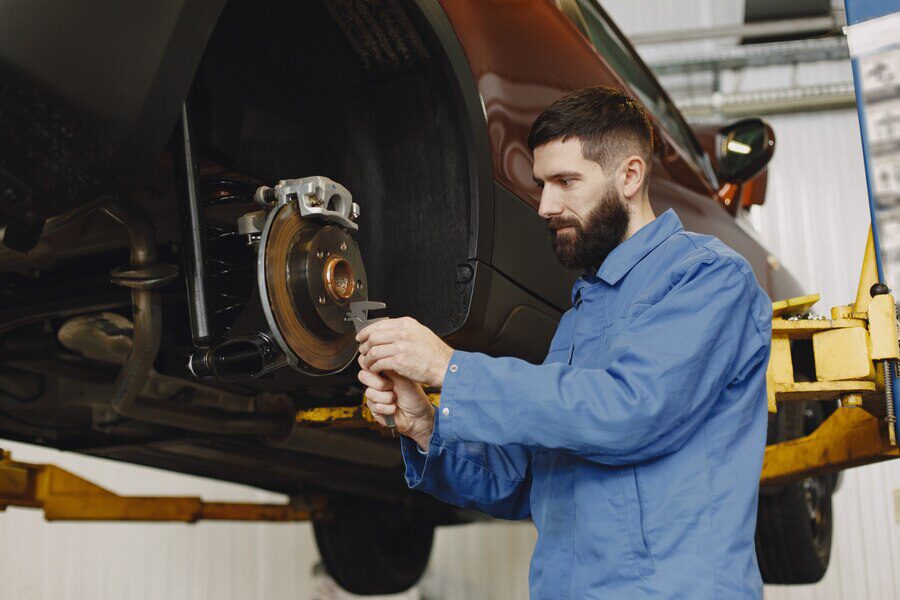
At the heart of brake noise lies the interaction between brake components. When you press the brake pedal, the brake pads clamp down on the brake rotors, creating friction to slow down or stop the vehicle. However, if there are irregularities or contamination on the brake surfaces, it can lead to vibrations, which manifest as noise. These vibrations are often the primary culprit behind squealing or squeaking brakes.
Worn Brake Pads
One of the most common causes of noisy brakes is worn brake pads. As brake pads wear down over time, they lose their ability to grip the brake rotors effectively. This can result in increased friction and noise as the worn pads make contact with the rotors. Regular inspection of brake pads is crucial to catch this issue before it escalates.
Brake Dust Accumulation
Every time you apply the brakes, a small amount of brake pad material wears off in the form of dust. Over time, this dust can accumulate on the brake components, including the brake pads and rotors. Excessive brake dust buildup can interfere with the smooth operation of the brakes, leading to noise when braking.
Rotor Glazing
Brake rotors can develop a glaze or shine on their surface over time, especially if the brakes are subjected to heavy use or aggressive driving. This glaze can reduce the effectiveness of the brake pads and contribute to noisy braking. Resurfacing or replacing the rotors may be necessary to eliminate the noise.
Moisture and Corrosion
Moisture and corrosion can also play a role in causing noisy brakes. When moisture gets trapped between the brake pads and rotors, it can lead to rust formation and uneven braking surfaces. This can result in noise and reduced braking performance. Driving through puddles or in areas with high humidity can exacerbate this issue.
Why Ignoring Noisy Brakes Can Be a Costly Mistake
That unmistakable screech or grind when you hit the brakes—it’s tempting to ignore, but doing so can lead to significant consequences. Noisy brakes are not just an annoyance; they’re often a warning sign of underlying issues with your vehicle’s braking system. In this blog post, we’ll explore why ignoring noisy brakes can be a costly mistake. From potential safety hazards to more extensive damage to your vehicle, we’ll uncover the risks associated with neglecting brake noise and why prompt action is crucial.
Safety Hazards
The most critical reason why ignoring noisy brakes is a mistake is the potential safety hazards it poses. Brakes are your vehicle’s primary safety system, and any issues with them can compromise your ability to stop safely. Ignoring noisy brakes increases the risk of brake failure, which can lead to accidents, injuries, or worse.
Worsening Damage
Noisy brakes are often an early indication of underlying issues, such as worn brake pads, damaged rotors, or malfunctioning brake components. Ignoring these warning signs allows the damage to worsen over time. What might start as a minor noise can escalate into more extensive damage, requiring costly repairs or even replacement of entire brake systems.
Increased Repair Costs
Addressing brake issues promptly can save you money in the long run. Ignoring noisy brakes can lead to more significant problems that require extensive repairs or replacements. For example, if worn brake pads are not replaced promptly, they can damage the brake rotors, leading to the need for rotor resurfacing or replacement—a much costlier endeavor.
Reduced Brake Performance
Noisy brakes are often a symptom of reduced brake performance. As brake components wear down or become damaged, they lose their effectiveness at slowing or stopping the vehicle. Ignoring noisy brakes means risking reduced brake performance, which can compromise your ability to drive safely, especially in emergency situations.
Voided Warranties
Neglecting brake issues could potentially void warranties on brake components or even your vehicle as a whole. Many warranties require regular maintenance and prompt repairs to remain valid. Ignoring noisy brakes and allowing damage to escalate could result in warranty claims being denied, leaving you to foot the bill for repairs.
The Role of Brake Inspections in Maintaining Vehicle Safety
Intro: Brakes are your vehicle’s lifeline, and regular inspections are the key to keeping them in top condition. In this post, we’ll explore the critical role brake inspections play in ensuring vehicle safety.
- Early Detection of Issues: Brake inspections allow mechanics to identify potential problems before they escalate. From worn brake pads to brake fluid leaks, early detection saves money and prevents accidents.
- Ensuring Proper Functionality: During inspections, technicians check brake components for proper function and alignment. This ensures that your brakes perform optimally when you need them most.
- Preventing Brake Failure: Regular inspections help prevent catastrophic brake failure. By catching issues early and addressing them promptly, you reduce the risk of accidents and injuries on the road.
- Compliance with Safety Standards: Brake inspections are often required by law or as part of vehicle safety regulations. Staying up-to-date with inspections ensures compliance and peace of mind.
Conclusion
The persistent annoyance of noisy brakes is not only an auditory nuisance but can also signal potential safety hazards if left unattended. Fortunately, the skilled technicians at Last Chance Auto Repair For Cars Trucks in Plainfield, IL, possess the expertise to diagnose and repair these issues effectively. By leveraging their knowledge and utilizing advanced diagnostic tools, they ensure that your brakes operate smoothly and quietly, restoring both peace of mind and road safety. Don’t let noisy brakes compromise your driving experience any longer; trust Last Chance Auto Repair For Cars Trucks to deliver reliable solutions that keep you and your vehicle safe on the road.
Contact Last Chance Auto Repair For Cars Trucks today at 815-577-0327 to schedule an appointment and experience the difference their expert brake services can make. Whether it’s a squeak, squeal, or grind, their team is ready to tackle any brake problem with precision and professionalism.
Exploring Advanced Techniques in Automotive Repair

Welcome to our comprehensive guide on “Exploring Advanced Techniques in Automotive Repair.” In the dynamic world of automotive maintenance, staying ahead requires more than just basic know-how. As technology evolves, so do the complexities of vehicle systems, demanding a deeper understanding and mastery of advanced repair techniques. In this series, we delve into the cutting-edge methods and technologies revolutionizing the automotive repair industry. From intricate diagnostics to innovative repair methodologies, we aim to equip both seasoned professionals and enthusiasts with the knowledge and skills needed to tackle even the most challenging automotive issues. Whether you’re a seasoned mechanic looking to expand your expertise or a passionate car owner eager to take your repair abilities to the next level, join us on this journey as we explore the frontier of automotive repair.
Mastering Diagnostic Tools: A Guide for Automotive Technicians
Diagnostic tools are the backbone of modern automotive repair, allowing technicians to pinpoint issues quickly and accurately. In today’s highly complex vehicles, mastering these tools is essential for any automotive technician looking to stay ahead of the curve. From basic OBD scanners to advanced diagnostic software, this guide will explore eight essential diagnostic tools and techniques every automotive technician should master.
OBD Scanners: The Foundation of Automotive
Diagnostics OBD (On-Board Diagnostics) scanners are the starting point for most automotive diagnostics. These handheld devices plug into a vehicle’s OBD port and communicate with the onboard computer to retrieve diagnostic trouble codes (DTCs) and other essential data. From engine misfires to emission system faults, learn how to interpret OBD codes and use them to diagnose a wide range of issues quickly and efficiently.
Scan Tools: Unlocking Advanced Diagnostic Capabilities
While OBD scanners provide basic diagnostic information, scan tools offer a more comprehensive view of a vehicle’s systems and subsystems. These powerful devices can communicate with multiple onboard computers and modules, allowing technicians to perform advanced diagnostic functions such as component testing, data logging, and bi-directional control. Discover how scan tools can streamline the diagnostic process and help you identify complex issues with ease.
Diagnostic Software: Harnessing the Power of Technology
In addition to hardware-based diagnostic tools, software-based solutions play a crucial role in modern automotive diagnostics. From manufacturer-specific diagnostic software to aftermarket diagnostic platforms, explore the wide range of software tools available to automotive technicians. Learn how to navigate diagnostic software interfaces, interpret diagnostic data, and perform advanced troubleshooting procedures to keep vehicles running smoothly.
Scope Meters: Seeing Beyond the Surface
Scope meters, also known as oscilloscopes, are indispensable tools for diagnosing electrical and electronic issues in vehicles. These devices allow technicians to visualize electrical signals in real-time, making it easier to identify abnormalities such as voltage spikes, waveform distortions, and signal dropouts. Whether diagnosing ignition system problems or troubleshooting sensor circuits, learn how to use scope meters to diagnose complex electrical issues with precision.
Multimeters: The Swiss Army Knife of Electrical Testing
Multimeters are versatile tools that every automotive technician should have in their toolbox. From measuring voltage and current to testing continuity and resistance, these handheld devices can perform a wide range of electrical tests quickly and accurately. Discover how to use multimeters to troubleshoot electrical circuits, diagnose charging system problems, and verify sensor operation with confidence.
Exploring Advanced Welding Techniques in Automotive Repair
Welding is a critical skill in automotive repair, essential for joining metal components and restoring structural integrity to vehicles. While basic welding techniques are sufficient for many repair tasks, advanced welding techniques offer greater precision, strength, and versatility. In this guide, we’ll explore eight advanced welding techniques used by automotive technicians to tackle even the most challenging repair jobs.
MIG Brazing: Strengthening Joints with Precision
MIG brazing is a welding technique that uses a MIG welder and a bronze or silicon bronze filler material to join metal components. Unlike traditional MIG welding, which uses steel filler wire, MIG brazing produces a stronger joint with minimal heat distortion. Learn how to set up a MIG brazing system, select the appropriate filler material, and execute precise brazed joints to reinforce critical structural components in automotive repair.
Resistance Spot Welding: Bonding Metal Sheets Seamlessly
Resistance spot welding is a common technique used in automotive manufacturing and repair to join metal sheets together. This process involves passing a high electrical current through the metal sheets to create localized heat, which fuses them together. Explore the principles of resistance spot welding, the equipment required, and best practices for achieving strong, durable spot welds that meet or exceed OEM specifications.
Laser Welding: Precision Welding for Complex Repairs
Laser welding is a high-tech welding process that uses a focused laser beam to join metal components together. This advanced technique offers exceptional precision, allowing technicians to weld intricate and hard-to-reach areas with ease. Discover how laser welding works, its applications in automotive repair, and the benefits of using this cutting-edge technology for repairing aluminum, stainless steel, and other exotic materials.
TIG Welding Aluminum: Mastering the Art of Aluminum
Welding TIG (Tungsten Inert Gas) welding is widely regarded as the best method for welding aluminum due to its precise control and high-quality welds. However, welding aluminum presents unique challenges, including oxide layer formation and heat sensitivity. Learn the specialized techniques and equipment required for TIG welding aluminum, including proper cleaning and preparation methods, filler metal selection, and welding parameter optimization.
Plasma Arc Welding: High-Precision Welding for Critical Joints
Plasma arc welding is an advanced welding process that uses a constricted arc to generate intense heat, allowing for high-speed, high-precision welding of metal components. This technique is particularly well-suited for welding thin materials and performing intricate welds with minimal distortion. Explore the advantages of plasma arc welding in automotive repair, including its ability to produce strong, aesthetically pleasing welds in challenging applications.
Unlocking the Power of Data: Leveraging Vehicle Telematics for Enhanced Repairs
In today’s digitally connected world, vehicle telematics offer a treasure trove of data that can revolutionize the way automotive repairs are conducted. From real-time diagnostics to predictive maintenance insights, telematics data provides valuable information that can streamline repair processes and improve overall efficiency. Let’s explore how automotive technicians can leverage vehicle telematics to enhance their repair capabilities and provide better service to customers.
- Real-time Diagnostics: Vehicle telematics systems continuously monitor key vehicle parameters, providing technicians with real-time diagnostic data to identify issues quickly and accurately.
- Predictive Maintenance: By analyzing telematics data, technicians can predict potential maintenance issues before they occur, allowing for proactive repairs and minimizing downtime for vehicle owners.
- Remote Diagnostics: Telematics-enabled remote diagnostics allow technicians to troubleshoot and diagnose vehicle problems remotely, reducing the need for in-person inspections and speeding up repair times.
- Performance Optimization: Telematics data can be used to optimize vehicle performance by fine-tuning engine parameters, adjusting transmission settings, and maximizing fuel efficiency.
Conclusion
Delving into advanced techniques in automotive repair unveils a world of innovation and precision. From sophisticated diagnostic tools to cutting-edge repair methods, the automotive industry continues to evolve, offering greater efficiency, reliability, and safety for vehicles on the road. By embracing these advancements, both technicians and consumers stand to benefit, with repairs becoming more accurate, cost-effective, and environmentally friendly. As we journey into the future of automotive repair, it’s crucial to stay informed and adapt to the latest technologies, ensuring that our vehicles receive the care they deserve.
If you’re in Plainfield, IL, and seeking expert automotive repair services that integrate advanced techniques, look no further than Last Chance Auto Repair For Cars Trucks. Our dedicated team is committed to staying ahead of the curve, employing state-of-the-art methods to diagnose and address any issue your vehicle may encounter. Contact us today at 815-577-0327 to experience the difference advanced automotive repair can make for your car or truck.
- « Previous Page
- 1
- …
- 13
- 14
- 15
- 16
- 17
- …
- 70
- Next Page »
