
A car is generally not worth fixing when the repair cost, overall condition, and likely future repairs make replacing it more practical. There is no universal dollar amount or mileage limit. A $4,000 repair may be reasonable on a well-maintained $15,000 vehicle, while a $1,500 repair may not make sense on a neglected $2,500 car.
To make the right decision, consider the car’s current value, repair cost, mileage, maintenance history, safety, reliability, structural condition, and expected repairs over the next one to three years.
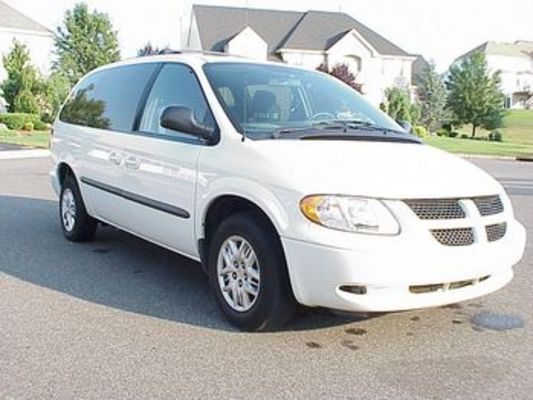
How Do You Know When a Car Is Not Worth Fixing?
Common signs that replacing a vehicle may make more sense include:
- Repairs are approaching the vehicle’s value
- Multiple major systems are failing
- Severe structural rust or accident damage exists
- Repairs are becoming frequent
- The vehicle is consistently unreliable
- More major repairs are likely soon
- The car has significant negative equity
- The vehicle no longer meets your needs
- Safety problems are expensive or difficult to correct
One expensive repair doesn’t automatically mean a car is finished. The overall condition matters more than age or mileage alone.
Repair Cost vs. Car Value
Comparing the repair cost with the vehicle’s current market value is a useful starting point.
| Vehicle Value | Repair Cost | General Consideration |
| $20,000 | $1,500 | Usually worth considering |
| $15,000 | $3,000 | Often reasonable |
| $10,000 | $4,000 | Requires evaluation |
| $7,000 | $5,000 | Replacement may make sense |
| $5,000 | $5,000 | Carefully assess condition |
| $3,000 | $4,000 | Replacement may be preferable |
These are guidelines, not strict rules. A reliable, well-maintained vehicle can justify a larger repair than a car with multiple existing problems.
Why the 50% Rule Isn’t Always Reliable
The idea that you shouldn’t spend more than 50% of a car’s value on repairs can be helpful, but it isn’t absolute.
For example, a car worth $8,000 may need a $4,000 transmission repair. That sounds expensive, but replacing the vehicle could require a down payment, monthly payments, higher insurance, taxes, registration, and financing costs.
The better question is often repair cost versus replacement cost, not repair cost versus vehicle value.
Look at Future Repair Costs
Don’t consider only today’s repair. Estimate what the car may need over the next 12 to 36 months.
For example, a vehicle might need:
- $1,800 transmission repair
- $800 in tires
- $700 suspension work
- $500 brake work
- $1,000 cooling-system repair
Potential repairs could total more than $4,800. Knowing the bigger picture can help you decide whether continuing to invest in the vehicle makes sense.
Signs Your Car Is Worth Fixing
An expensive repair can still be a good investment if the vehicle is otherwise healthy.
Healthy Engine and Transmission
A strong engine and transmission can indicate that the vehicle still has significant useful life remaining.
Good Body Condition
A solid body without severe rust or structural damage is a positive sign.
Consistent Maintenance
Good maintenance records make the vehicle’s condition easier to evaluate and can indicate responsible previous ownership.
Infrequent Repairs
An occasional major repair is very different from repeated breakdowns every few months.
No Monthly Payment
If you own the vehicle outright, repairing it may still be considerably cheaper than financing another vehicle.
Signs Your Car May Not Be Worth Fixing
Multiple Major Problems
Engine, transmission, electrical, suspension, and rust problems occurring together can make continued ownership expensive.
Frequent Repair Bills
Review your repair expenses from the past 12–24 months. Several large repair bills may indicate that the vehicle is entering an expensive stage of ownership.
Severe Structural Rust
Surface rust isn’t necessarily a reason to replace a car. Severe corrosion affecting the frame, suspension mounting points, brake lines, or other critical areas is much more concerning.
Major Accident Damage
Extensive collision damage can involve structural components, suspension, electrical systems, and safety equipment. A professional inspection can help determine whether continued repairs are practical.
Poor Reliability
Frequent breakdowns, towing costs, missed work, and emergency repairs add to the real cost of owning an unreliable vehicle.
Does Mileage Determine Whether a Car Is Worth Fixing?
No. Mileage alone doesn’t determine whether a vehicle is worth repairing.
A properly maintained car with 150,000 or even 200,000 miles may be a better investment than a poorly maintained vehicle with 80,000 miles.
Consider mileage alongside:
- Maintenance history
- Engine and transmission condition
- Rust
- Accident history
- Repair history
- Driving conditions
- Overall reliability
Is a 10- or 15-Year-Old Car Worth Fixing?
Yes, depending on its condition. An older car with a healthy engine, good transmission, minimal rust, reliable electronics, and consistent maintenance can remain useful for years.
The important distinction is between old and reliable and old and constantly failing.
When Is a Major Repair a Good Investment?
Suppose a vehicle is worth $12,000 and needs a $3,000 repair. If the repair is expected to restore reliable transportation for several more years, fixing it may be cheaper than replacing the vehicle.
A replacement can involve:
- Down payment
- Monthly payments
- Financing interest
- Insurance
- Taxes and registration
- Maintenance
- Depreciation
When Is a Major Repair a Bad Investment?
Consider a $4,000 vehicle that needs a $4,500 engine repair, $2,000 transmission work, $1,500 suspension repairs, and $1,000 in electrical work.
Even though each repair may be possible, the combined expense makes replacement worth considering. The more major problems a vehicle has, the harder it becomes to justify continued investment.
What If You Still Owe Money?
Check both the vehicle’s value and your remaining loan balance.
For example:
- Vehicle value: $10,000
- Loan balance: $15,000
- Negative equity: $5,000
Trading in the vehicle could cause the negative equity to be added to another loan, potentially making replacement substantially more expensive.
Should You Fix a Car Before Selling It?
Not necessarily. Minor improvements such as replacing bulbs, wipers, or cleaning the interior may be worthwhile.
Major mechanical repairs require more thought. A $4,000 repair doesn’t necessarily increase the vehicle’s sale value by $4,000, so determine its as-is value and estimated repaired value before spending heavily.
Get a Professional Diagnosis
Before deciding whether a vehicle is worth fixing, get an accurate diagnosis. A technician should determine:
- What failed
- How the problem was confirmed
- The complete repair cost
- Other existing problems
- Likely upcoming repairs
- Expected vehicle life after repair
- Available repair warranty
A noise or warning light doesn’t always mean the worst-case scenario. Accurate diagnosis can prevent unnecessary repairs and help you make a more informed decision.
Repair vs. Replace: A Simple Framework
Use these five steps:
- Determine the vehicle’s current value.
- Get a detailed, itemized repair estimate.
- Inspect the entire vehicle, not just the failed component.
- Estimate likely repairs over the next 12–36 months.
- Compare the total cost with replacing the vehicle.
This approach is more reliable than following a single percentage or mileage rule.

Frequently Asked Questions
At what point is a car not worth fixing?
A car may not be worth fixing when major repair costs combine with frequent breakdowns, severe rust, poor reliability, or several additional expensive problems. There is no universal repair cost or mileage limit.
Is it worth fixing a car when the repair costs more than it’s worth?
Sometimes. If replacing the vehicle would cost substantially more and the repair should restore reliable transportation, fixing it may still be financially sensible.
Should I repair a car that needs a $5,000 repair?
It depends on the vehicle’s condition, value, reliability, future repair needs, and replacement cost. A $5,000 repair can make sense on one vehicle but not another.
Is a 200,000-mile car worth fixing?
Yes, potentially. A high-mileage vehicle with excellent maintenance and a healthy drivetrain may still provide reliable transportation.
Should I fix my car or buy another one?
Compare the total expected cost of keeping your vehicle with the complete cost of replacement, including financing, insurance, taxes, maintenance, repairs, and depreciation.
How do I know if a mechanic’s estimate is worth it?
Request a detailed diagnosis and itemized estimate. Ask what failed, why the repair is necessary, what other repairs are approaching, and what condition the rest of the vehicle is in.
Conclusion
So, at what point is a car not worth fixing? Generally, it’s when the total cost of keeping the vehicle—including today’s repair and likely future repairs—becomes unreasonable compared with obtaining dependable replacement transportation.
Consider the vehicle’s value, repair costs, mileage, maintenance history, engine, transmission, rust, safety, reliability, future repairs, loan balance, and replacement costs.
A $4,000 repair on a reliable, paid-off vehicle may be far cheaper than taking on a new auto loan. Conversely, a $2,000 repair may not make sense when the car already has severe rust, a failing transmission, an unreliable engine, and other major problems.
If you’re unsure whether your car or truck is worth repairing, Last Chance Auto Repair For Cars Trucks in Plainfield, IL can help diagnose the problem and explain your repair options.
For Car Repair Plainfield IL, Car Repair Near Me, Auto Repair, Auto Repair Near Me, Automotive Repair, Brake Shop, Brake Repair, Brake Repair Plainfield IL, or Brake Service, call 815-577-0327.
Getting an accurate diagnosis before making a major financial decision can help you avoid unnecessary repairs and get more life from a vehicle that’s still worth keeping.
