
A car mechanic should generally charge around $110 to $170+ per hour for professional automotive repair in the United States. A rate of $100 per hour can be fair and competitive, especially at an independent repair shop or in a lower-cost market. Dealerships and specialty shops may charge $150 to $250+ per hour.
However, the hourly rate is only one part of an auto repair bill. Your total cost also depends on labor hours, parts, diagnostics, vehicle type, repair complexity, and shop overhead.
For example, a shop charging $100 per hour for four hours of labor charges $400 in labor. A shop charging $150 for the same four hours charges $600. But if the second shop completes the repair in three billable hours, its labor total is only $450.
That’s why you should compare the complete repair estimate, not just the advertised hourly rate.
What Is the Average Mechanic Labor Rate?
There is no single nationwide rate for mechanics. Prices vary based on location, technician expertise, vehicle type, and repair facility.
| Repair Shop Type | Approximate Labor Rate |
| Small Independent Shop | 100–145/hour |
| General Independent Shop | 110–170+/hour |
| Dealership | 150–250+/hour |
| European/Specialty Shop | 150–200+/hour |
| EV or Advanced Vehicle Specialist | 150–200+/hour |
| Mobile Mechanic | 100–200+/hour |
These are general estimates rather than fixed industry prices. A rural shop may charge less than one in a major metropolitan area, while a specialist working on a luxury or European vehicle may charge more.
Is $100 an Hour a Fair Mechanic Rate?
Yes. $100 per hour is generally a reasonable mechanic labor rate and may be below the rates charged by many professional repair shops.
A $100 rate can be especially reasonable when the shop provides:
- Experienced technicians
- Modern diagnostic equipment
- Clear estimates
- Quality repair procedures
- Warranty coverage
- Professional facilities
- Good customer communication
Remember, the cheapest hourly rate isn’t necessarily the cheapest repair.
Why Do Mechanics Charge So Much Per Hour?
A shop’s labor rate is not the same as the mechanic’s personal income. The rate helps cover the costs of operating the entire business.
Shop Overhead
Repair shops may have significant expenses for rent, utilities, insurance, licensing, employee wages, equipment, waste disposal, administration, and customer service.
Diagnostic Equipment
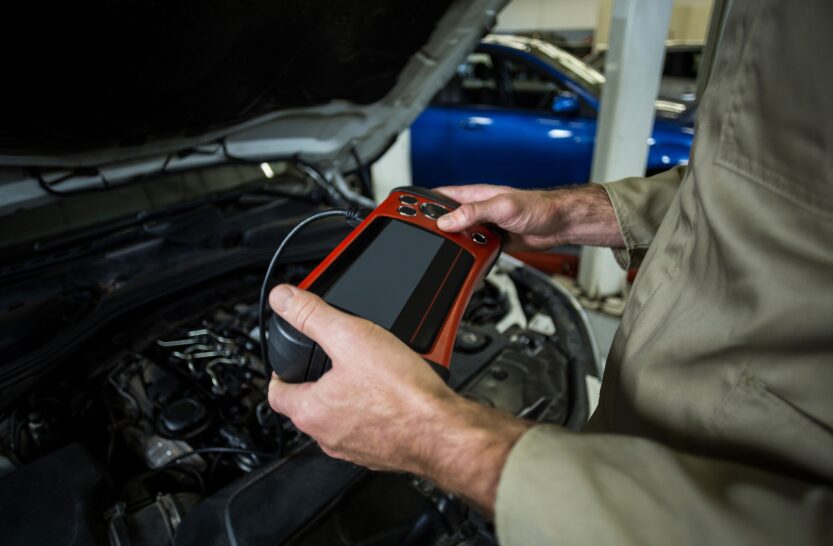
Modern vehicles require advanced scan tools, electrical testing equipment, manufacturer software, programming equipment, and specialty tools. Some diagnostic systems also require subscriptions and regular updates.
Technician Training
Today’s technicians need ongoing training in areas such as engine diagnostics, electrical systems, transmissions, hybrids, EVs, computer diagnostics, and advanced driver-assistance systems.
These expenses contribute to the hourly labor rate.
How Does Location Affect Mechanic Labor Rates?
Location has a major impact on automotive labor pricing. Shops in expensive metropolitan areas generally have higher operating costs for property, wages, insurance, utilities, taxes, and business services.
For this reason, compare a mechanic’s rate with other reputable shops in the same local market rather than relying only on a nationwide average.
Why Do Dealerships Charge More?
Dealership service departments often have higher labor rates because they maintain manufacturer-specific equipment, diagnostic software, factory training, larger facilities, service staff, and specialized repair procedures.
Dealerships can be particularly useful for warranty work, recalls, manufacturer programming, and brand-specific diagnostics. For routine maintenance and general repairs, an independent auto repair shop may offer a competitive alternative.
Does the Vehicle Affect the Hourly Rate?
Yes. Luxury, European, hybrid, and electric vehicles may require specialized tools, equipment, and technician training.
European vehicles can have complicated electrical systems and manufacturer-specific diagnostic requirements. Hybrid and electric vehicles contain high-voltage systems that require additional safety training and specialized equipment.
These factors can contribute to higher labor rates.
How Labor Hours Affect the Final Repair Price
The number of billable hours can be just as important as the hourly rate.
| Hourly Rate | Labor Hours | Total Labor |
| $100 | 2 | $200 |
| $100 | 4 | $400 |
| $125 | 2 | $250 |
| $125 | 4 | $500 |
| $150 | 2 | $300 |
| $150 | 4 | $600 |
A shop with a higher hourly rate can still provide a competitive total estimate if it completes the repair in fewer billable hours.
What Is Flat-Rate or Book-Time Labor?
Many repair shops use flat-rate labor, also called book time. Instead of charging for the exact time a technician spends on a repair, the job is assigned a standardized labor allowance.
For example, if a repair has a book time of three hours and the shop charges $100 per hour:
3 × $100 = $300
Even if the technician finishes in two hours, the customer may still be charged for the three-hour labor allowance.
Billing practices vary, so ask how labor is calculated before approving a repair.
Should Mechanics Charge a Diagnostic Fee?
Yes. A diagnostic fee is not automatically unreasonable. Finding the cause of a vehicle problem can require significant technician time and specialized equipment.
An intermittent electrical issue, for example, may require scanning the vehicle, reviewing live data, testing circuits, inspecting wiring, checking sensors, and confirming the underlying fault.
Before authorizing diagnostics, ask what the fee includes and whether it will be applied toward the repair.
How to Tell Whether a Mechanic’s Rate Is Fair
A professional repair shop should provide enough information for you to understand what you’re paying for.
Ask for a written estimate that identifies:
- Labor and labor hours
- Parts
- Diagnostic fees
- Additional charges
- Taxes
- Warranty coverage
For expensive repairs, consider getting a second estimate. Compare the complete repair scope rather than simply choosing the lowest price.
How to Save Money on Mechanic Labor
You don’t necessarily need the cheapest mechanic to reduce repair costs.
Keep up with maintenance: Following the vehicle manufacturer’s maintenance schedule can help identify problems before they become major repairs.
Address warning signs promptly: Dashboard lights, strange noises, vibrations, fluid leaks, burning smells, starting problems, and brake issues should not be ignored.
Ask before authorizing additional work: Have the shop contact you before performing work that exceeds the approved estimate.
Choose the right shop: A general repair shop may be ideal for routine service, while specialized problems may require a shop with advanced diagnostic expertise.
Is a Higher Hourly Mechanic Rate Worth It?
Sometimes.
Suppose one shop charges $100 per hour and another charges $150. If both require four hours, the totals are $400 and $600.
But if the $100-per-hour shop requires six hours while the $150-per-hour shop completes the repair in four, both repairs cost $600 in labor.
This shows why experience, efficiency, and diagnostic accuracy matter alongside the hourly rate.
Frequently Asked Questions
What is a reasonable hourly rate for a car mechanic?
A reasonable rate is often around $110 to $170+ per hour, although rates vary by location and shop type. A $100 rate can be competitive at an independent shop, while dealerships and specialty facilities may charge $150 to $250 or more.
Is $100 an hour too much for a mechanic?
No. $100 per hour is generally a fair rate for professional automotive labor. Consider the labor hours, quality of work, warranty, and total repair price.
Why are dealership mechanics more expensive?
Dealerships often have higher overhead and must maintain manufacturer-specific equipment, software, training, facilities, and administrative operations.
Do mechanics charge for their actual time?
Not always. Many shops use flat-rate or book-time labor, meaning a standardized labor allowance determines the charge rather than the exact time spent.
How can I tell if a mechanic is overcharging me?
Request a written estimate showing labor, labor hours, parts, diagnostic fees, and other charges. For major repairs, compare the complete estimate with another reputable shop.
Can I negotiate a mechanic’s hourly rate?
It depends on the shop. Some use fixed rates, while others may have flexibility. You can also ask about parts options, warranties, or ways to reduce the overall repair cost.
Conclusion
So, how much should a car mechanic charge per hour? For many professional repair shops, $110 to $170+ per hour is a reasonable general range, while $100 per hour can be a fair and competitive rate. Dealerships and specialty facilities may charge considerably more because of their equipment, training, facilities, and specialized services.
The most important factor isn’t simply finding the lowest hourly rate. Consider the complete estimate, including labor hours, parts, diagnostic charges, warranty, and scope of work.
A good mechanic should explain the problem, provide a reasonable estimate, and obtain your approval before unexpected work is performed.
Need Auto Repair in Plainfield, IL?
If you’re searching for dependable Car Repair in Plainfield, IL, Last Chance Auto Repair For Cars Trucks can help with professional automotive service for cars and trucks.
For Car Repair, Car Repair Plainfield IL, Car Repair Near Me, Auto Repair, Auto Repair Near Me, Automotive Repair, Brake Shop, Brake Repair, Brake Repair Plainfield IL, and Brake Service, call Last Chance Auto Repair For Cars Trucks at 815-577-0327 to discuss your vehicle’s needs and find the right repair solution.
